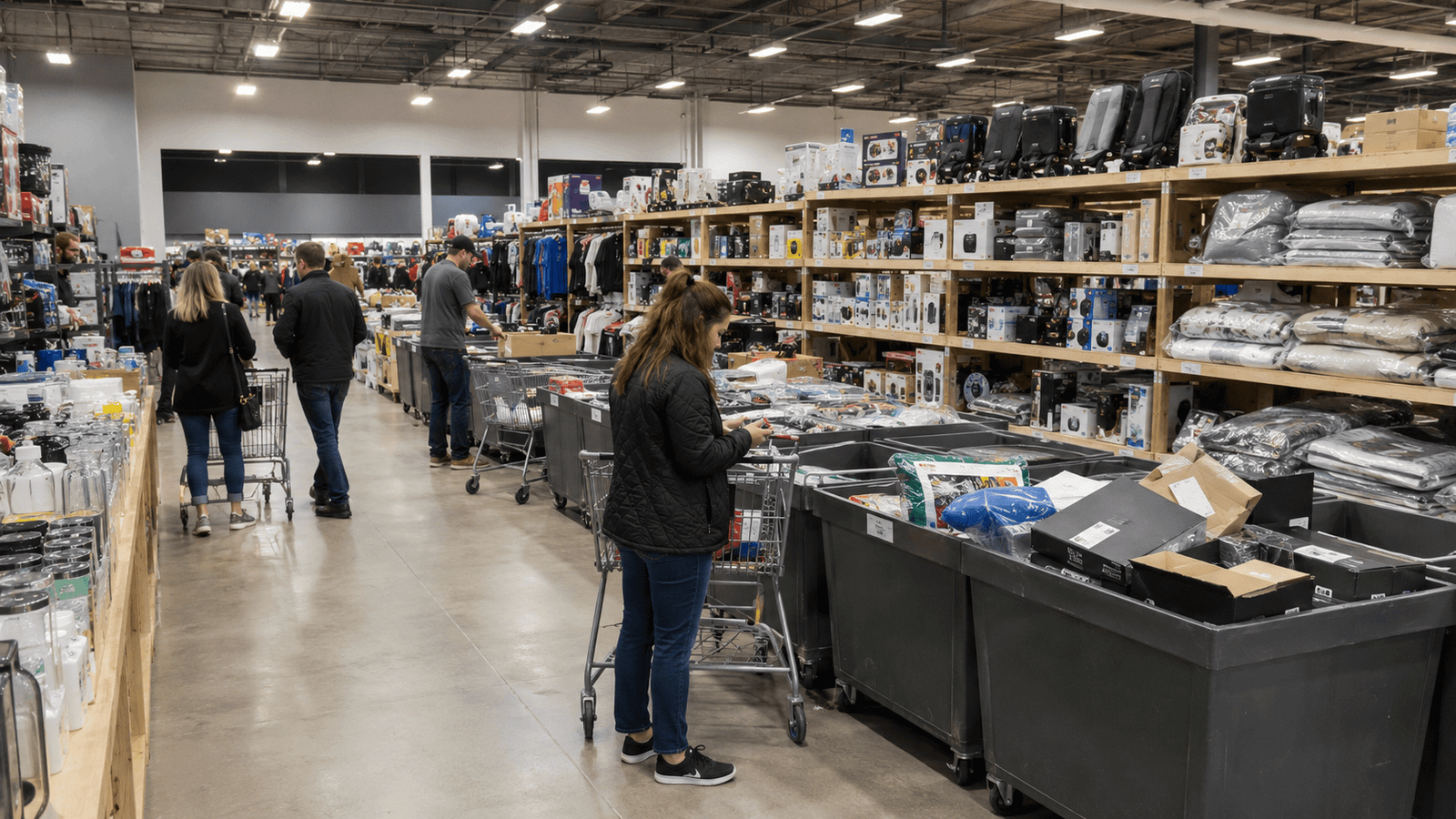
If you enjoy bargain hunting, a liquidation outlet can be an interesting place to shop. A Crate Deal liquidation outlet is a bin-style discount store in Tea, South Dakota, where shoppers can look through crates of liquidation merchandise and buy items at a set price for the day. The store says it purchases liquidated merchandise by the truckload and places products in crates for shoppers to discover.
Unlike a traditional retail store, you may not know exactly what you will find before you visit. One trip could include home goods, electronics, toys, tools, clothing, or other general merchandise. The selection can change as inventory moves through the store.
This makes liquidation shopping different from normal retail shopping. You may find a useful product at a low price, but you also need to check its condition, completeness, and value before paying.
In this guide, you will learn how A Crate Deal liquidation outlet works, what types of products you may find, how its pricing model works, what product conditions to watch for, and how to decide whether a deal is actually worth buying.
What Is an A Crate Deal Liquidation Outlet?
A liquidation outlet sells merchandise that has entered the secondary retail market rather than being sold through a standard retail shelf at its original price.
A Crate Deal liquidation outlet is a specific liquidation outlet located at 46923 Austin St., Tea, South Dakota. Its official website describes the business as a discount store with an entertainment-style shopping experience, where merchandise is placed in crates for customers to search through.
What is a liquidation outlet?
A liquidation outlet is a store that sells goods obtained through liquidation channels. These goods can include excess inventory, customer returns, overstock, shelf pulls, and other merchandise that a retailer or distributor no longer wants to keep in its normal sales system.
The exact source and condition of products can vary from one liquidation business to another.
At A Crate Deal liquidation outlet, the store states that it buys liquidated merchandise by the truckload. The merchandise is then placed into crates, allowing shoppers to search for individual products.
How liquidation merchandise works
A retailer may have more inventory than it needs. It may also receive products that customers have returned. Instead of keeping every item in regular inventory, some merchandise can move through liquidation channels.
A liquidator may purchase these goods in large quantities. A liquidation outlet then sells them to consumers at lower prices.
The result is a shopping model based on discovery. You are not simply walking into a store and selecting from a fixed shelf of identical products.
Liquidation stores vs. regular retail stores
A regular retail store usually has organized inventory, consistent product lines, and standard pricing.
A Crate Deal liquidation outlet is different.
| Regular Retail | Liquidation Outlet |
|---|---|
| More predictable inventory | Inventory changes often |
| Products usually have standard retail packaging | Packaging and condition can vary |
| Prices are usually based on individual products | Some outlets use flat daily pricing |
| Larger quantities may be available | Quantities may be limited |
| Shopping is more predictable | Shopping can involve more searching |
Neither model is automatically better. It depends on what you are trying to buy.
Who shops at liquidation outlets?
Several types of shoppers may be interested in liquidation stores:
- Bargain shoppers
- Families looking for low-cost household items
- Hobbyists
- DIY shoppers
- Gift shoppers
- Small business owners
- Online resellers
- People who enjoy treasure-hunt-style shopping
For a reseller, the attraction is obvious: a low purchase price can create an opportunity for a profit. However, a low price does not guarantee that an item will sell.
How A Crate Deal Liquidation Outlets Work
The basic idea is simple: liquidation merchandise is acquired in large quantities, placed into the store’s shopping system, and sold at prices that can change during the sales cycle.
When visiting an A Crate Deal liquidation outlet, shoppers can expect the merchandise selection to vary based on new inventory arrivals and previous customer purchases.
Where does liquidation inventory come from?
Liquidation inventory can come from different sources. Common examples include:
- Customer returns
- Overstock
- Excess inventory
- Shelf pulls
- Seasonal merchandise
- Products being cleared from a retailer’s inventory
- Other secondary-market inventory
The exact source of a particular item is not always obvious from looking at it.
That is why shoppers should judge each product individually rather than assuming that every item is new.
Customer returns and overstock
Customer returns can enter liquidation channels when a retailer decides that returning an item to normal inventory is not practical.
For example, a customer may return a product because they changed their mind. Another product may have opened packaging or signs of previous handling.
Overstock is different. An overstock item may simply be merchandise that a retailer has more of than it needs.
These two categories can look very different when you inspect them.
Shelf pulls and excess inventory
Shelf pulls are products removed from normal retail shelves. They may be unused, but packaging can sometimes show signs of handling.
Excess inventory can also move into liquidation when a seller wants to make room for newer products.
This is one reason liquidation shopping can include a wide mixture of conditions.
How products are sorted and priced
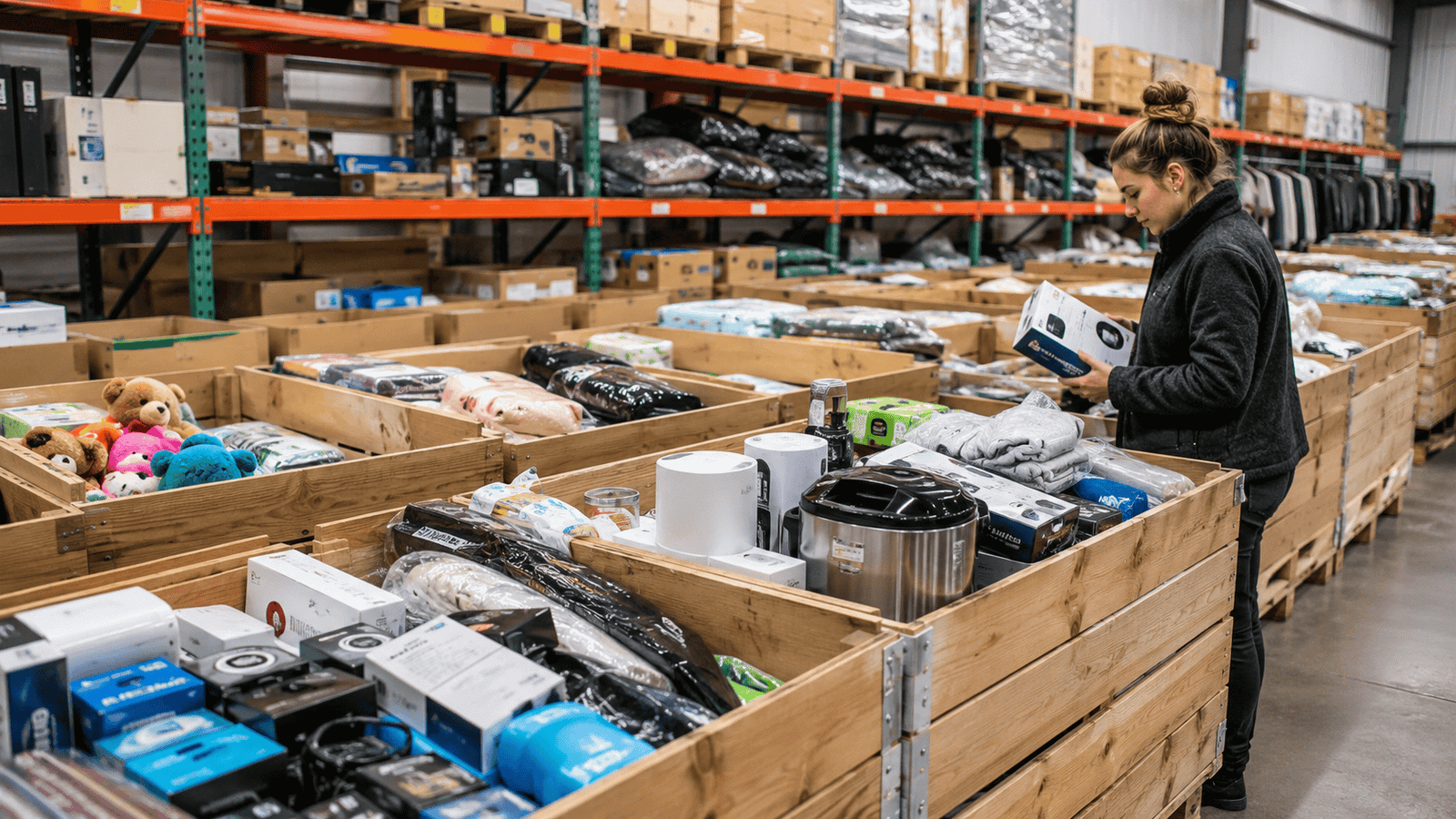
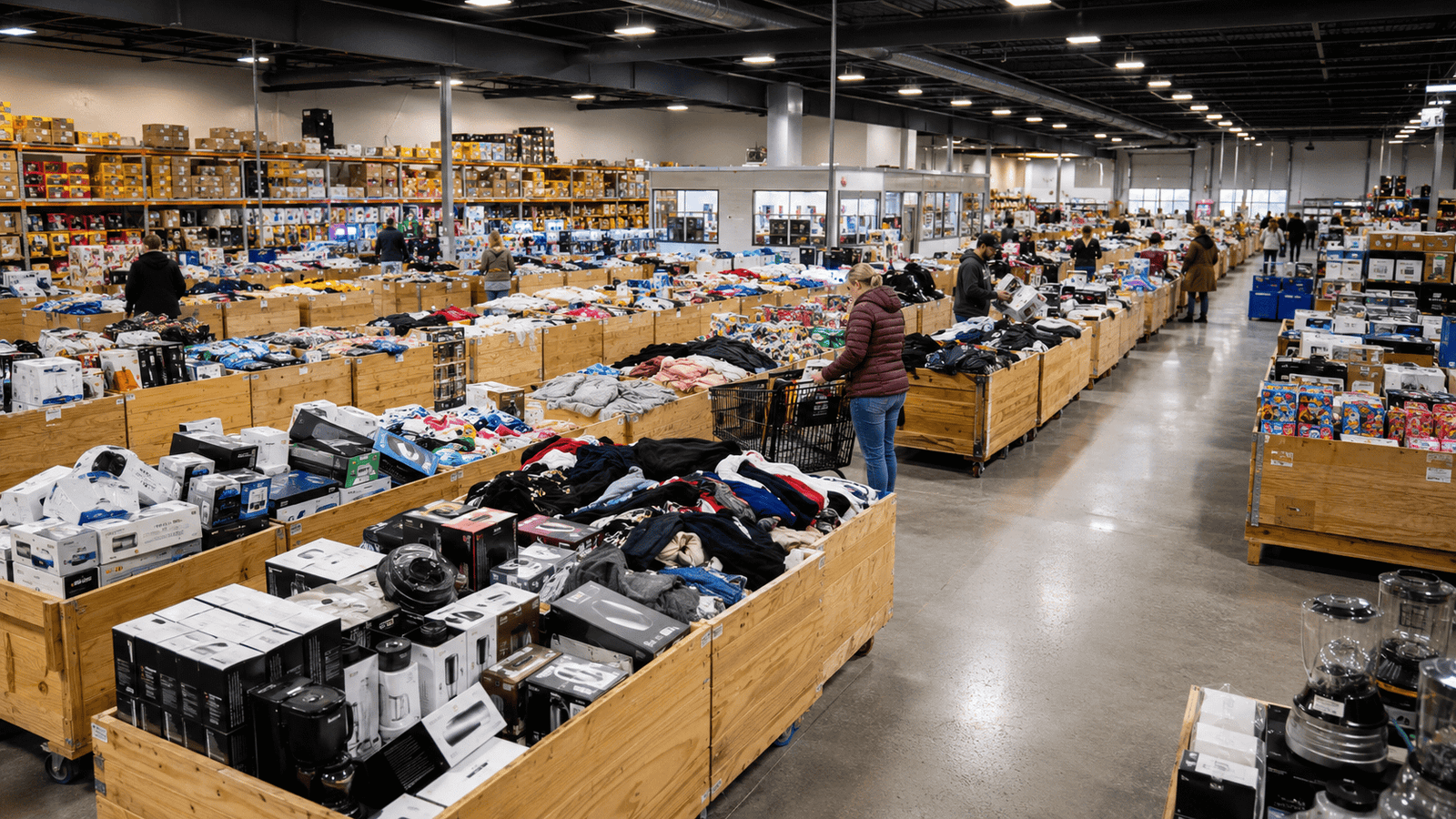
A Crate Deal liquidation outlet uses a crate-based shopping model. Its website says it has 25 crates and that merchandise varies from crate to crate.
The store also uses a changing flat-price system rather than assigning a separate price to every item in the crates. According to its official site, the advertised weekly cycle begins with freshly stocked merchandise at a higher per-item price and decreases as the week progresses.
Because prices and schedules can change, shoppers should check the store’s current information before making a trip.
How inventory changes over time
Liquidation inventory is not permanent.
New merchandise arrives, shoppers purchase items, and unsold products may move through the pricing cycle. A Crate Deal liquidation outlet says it clears and prepares its crates for a fresh truckload during its closed days.
This means one visit may look completely different from another.
That changing selection is a major part of the appeal.
What Can You Buy at a Liquidation Outlet?
One of the most interesting things about liquidation shopping is the variety.
You should not expect every category to be available on every visit. Instead, think of the store as a constantly changing selection.
The store’s own information mentions products such as tablets, gaming systems, home goods, cameras, cosmetics, designer goods, and other merchandise.
Electronics
Electronics can be among the most exciting finds at an A Crate Deal liquidation outlet.
Possible examples include:
- Small electronic accessories
- Cameras
- Tablets
- Chargers
- Computer accessories
- Audio products
- Gaming-related items
Electronics also require extra inspection.
Check whether the item is complete, whether important accessories are included, and whether the product appears damaged.
If the store allows testing, test the product before purchasing.
Home and kitchen products
Home goods can be useful for everyday shoppers.
You may encounter:
- Kitchen accessories
- Storage products
- Small household tools
- Decor
- Cleaning-related products
- Organization products
- Small appliances
For these items, look for missing pieces and damaged packaging.
Clothing and shoes
Liquidation channels can also contain apparel and footwear.
Check:
- Size
- Condition
- Stains or visible damage
- Missing buttons or parts
- Packaging
- Signs of wear
If the item is intended for resale, research the exact brand and model rather than assuming that a recognizable label automatically means high resale value.
Tools and hardware
Tools can be useful liquidation purchases when they are complete and functional.
At A Crate Deal liquidation outlet, shoppers interested in tools should look for:
- Hand tools
- Small hardware
- Workshop accessories
- Home improvement products
- Tool organizers
Inspect metal parts, handles, moving components, and included accessories.
Toys and general merchandise
Toys and general merchandise can provide plenty of variety.
Examples may include:
- Games
- Children’s products
- Craft items
- Office supplies
- Seasonal goods
- Household accessories
Always check age recommendations and safety information on children’s products before buying them for use.
Mixed liquidation lots and crates
A major feature of the A Crate Deal liquidation outlet model is the mixed-crate format.
Instead of shopping through a narrow product category, you may find many different types of merchandise in the same visit.
That unpredictability is part of the fun—but it also means you need to shop carefully.
A Crate Deal Liquidation Outlet Prices
Pricing is one of the biggest reasons people visit liquidation outlets.
A Crate Deal liquidation outlet uses a flat-price system in which items in the crates have the same advertised price on a particular shopping day. The price changes as the weekly cycle progresses.
The website currently describes a cycle starting with freshly stocked crates at $8 per item, followed by lower prices on later shopping days.
Because store schedules and prices can change, confirm current pricing directly with the outlet before visiting.
Why liquidation products can cost less
Liquidation products can sell for less because they are being moved through a secondary sales channel.
The seller may want to:
- Clear inventory
- Make room for new merchandise
- Recover part of the original inventory cost
- Move large quantities quickly
Lower pricing does not necessarily mean the product is defective. It means the product is being sold under a different retail model.
For shoppers, A Crate Deal liquidation outlet can therefore be an opportunity to find discounted merchandise, but each purchase should still be evaluated based on condition, completeness, usefulness, and actual market value.
Factors that affect pricing
The value of a liquidation item depends on several things:
- Product condition
- Brand
- Demand
- Completeness
- Original retail value
- Current market price
- Whether the item works
- Whether packaging is included
- Your intended use
A product with a high original retail price may have little resale value if demand is low.
New vs. used merchandise
Do not assume every liquidation product is new.
Some products may be new and unopened. Others may have opened packaging, previous use, missing parts, or cosmetic wear.
The condition should be evaluated before you decide what the product is worth.
Condition and product value
Suppose you see a product that normally sells for $50 and the liquidation price is $8.
That sounds attractive.
But imagine that the item is missing a required accessory and the current market price for a complete version is only $25.
The real value is not simply the original $50 retail price.
The better question is: What is this item worth today in its actual condition?
Retail price vs. liquidation price
Retail price and liquidation price are not the same thing.
A product’s original retail price can help provide context, but it should not be the only number you consider.
For resellers especially, current selling prices are more useful than old retail prices.
Product Conditions to Understand Before Buying
Understanding condition is one of the most important skills for liquidation shopping.
New merchandise
A new item is generally unused and may still have its original packaging.
Even then, inspect it.
Check for:
- Broken seals
- Missing accessories
- Damage
- Expired products where relevant
- Incorrect parts
“New” should not mean “skip the inspection.”
Open-box items
Open-box merchandise has had its original packaging opened.
The product may be unused, lightly handled, or previously returned.
Check the contents against the manufacturer’s package list whenever possible.
Customer returns
A returned item may be perfectly usable, or it may have a problem.
Do not treat “customer return” as a guarantee of either quality or poor condition.
Inspect the actual item.
Used products
Used merchandise has been previously handled or used.
Look for:
- Wear
- Scratches
- Missing components
- Dirt
- Signs of damage
- Functional problems
The amount of wear can have a major impact on value.
Damaged or incomplete items
Some liquidation products may have damaged packaging or missing components.
A missing cable might be inexpensive to replace. A missing proprietary part could make the product unusable.
The difference matters.
Why checking condition matters
A bargain only has value if the product meets your needs.
For example, a $5 item that requires $20 in replacement parts is not necessarily a $5 bargain.
Before buying, ask yourself:
Would I still want this product at this price if I knew its exact condition?
That simple question can prevent many poor purchases.
How to Shop at an A Crate Deal Liquidation Outlet
Liquidation shopping rewards patience.
You do not need to buy something just because the price is low.
1. Research products before buying
If you find an unfamiliar product, search for its model number or exact name when practical.
Research can tell you:
- What the product normally does
- What accessories it needs
- Its current market price
- Whether replacement parts exist
- Whether people still want it
2. Check item condition
Look at the product itself, not just the packaging.
For electronics, inspect ports and physical damage.
For household products, check for cracks and missing parts.
For clothing, inspect seams and fabric.
For tools, check handles and moving components.
3. Compare prices
Do not compare only with the manufacturer’s suggested retail price.
Compare with current prices from legitimate retailers and current resale prices if you plan to resell.
4. Set a spending budget
A bin store can make it easy to buy several inexpensive items.
Ten $5 purchases equal $50.
That is why a budget is useful.
Decide how much you want to spend before entering the store.
5. Inspect larger purchases carefully
The more expensive the purchase, the more careful you should be.
For larger purchases, check:
- Product condition
- Included parts
- Compatibility
- Return policy
- Current market value
6. Keep receipts and understand store policies
Always keep your receipt when one is provided.
Before paying, understand the store’s current return or exchange rules.
Liquidation outlets may have different policies from traditional retailers, and individual items may be sold under conditions that limit returns.
When in doubt, ask the store before purchasing.
Buying Liquidation Merchandise for Resale
Liquidation shopping can also appeal to resellers.
However, successful reselling requires more than finding cheap products.
Evaluate potential inventory
Before buying an item for resale, consider:
- Demand
- Selling price
- Product condition
- Competition
- Shipping cost
- Marketplace fees
- Return risk
- Time required to list the item
A cheap product with no buyers is still a poor inventory purchase.
Calculate expected profit
A simple calculation can help.
Expected profit = Selling price − Purchase cost − Fees − Shipping − Other costs
For example, suppose you buy an item for $6.
You believe it can sell for $25.
If marketplace fees, shipping, packaging, and other costs total $10, your estimated profit would be:
$25 − $6 − $10 = $9
That is very different from saying, “I bought it for $6 and can sell it for $25, so I will make $19.”
The second calculation ignores important costs.
Selling through online marketplaces
Resellers may use online marketplaces to reach buyers.
Before listing an item, research actual completed sales where available. Asking prices are not the same as completed sales.
Also write accurate descriptions.
If an item is used or incomplete, say so clearly.
Factor in shipping, fees, and returns
Shipping can completely change the economics of a liquidation purchase.
A small, lightweight product may be easy to ship.
A large or fragile product can cost much more.
Marketplace fees and possible returns should also be part of your calculation.
Not every cheap product is profitable
This is one of the most important liquidation lessons.
Low price does not equal high profit.
A $2 item that sells for $3 may be less attractive than a $10 item that sells consistently for $30.
Focus on the complete business equation.
Pros and Cons of Shopping at Liquidation Outlets
Every shopping model has advantages and disadvantages.
Pros
Potentially lower prices
Liquidation stores can provide access to merchandise at prices below standard retail pricing.
A Crate Deal’s flat-price model can make it possible to purchase certain items for a low per-item cost.
Variety of products
The selection can cover many categories.
You may find electronics next to home goods, toys, accessories, or other general merchandise.
Opportunities for resellers
Low acquisition costs can create opportunities for resellers who understand their market and calculate costs carefully.
Frequently changing inventory
The inventory changes over time, so repeat visits can produce different shopping experiences.
Cons
Product condition can vary
Not every item will have the same condition.
Some may be new, while others may have opened packaging or signs of use.
Limited quantities
Liquidation inventory is often available in limited quantities.
If you find one useful product, there may not be another identical one available.
Some items may be incomplete
Missing accessories or parts can reduce the value of an item.
Returns may have restrictions
Liquidation stores can have policies that differ from regular retailers.
Always understand the current policy before purchasing.
Tips for Getting the Best Liquidation Deals
Getting a good deal is not simply about finding the lowest price.
Visit regularly
Because inventory changes, repeat visits can provide new opportunities.
If you live nearby, you may be able to check different points in the store’s pricing cycle.
Compare prices before purchasing
Use current market prices as a reference.
A $5 product is not automatically a bargain if similar products sell for $4 elsewhere.
Look beyond popular products
Everyone looks for expensive electronics and famous brands.
Sometimes the better opportunity is an ordinary product with steady demand.
Think about usefulness, not just excitement.
Inspect items carefully
Take a few extra minutes to check condition.
Look for missing pieces, damage, and signs of use.
Know your resale market
If you are buying to resell, know what your customers want.
A product can be valuable in theory but difficult to sell in practice.
Avoid buying simply because something looks cheap
This is perhaps the most useful rule.
Do not let a low sticker price make the decision for you.
Ask:
- Do I need it?
- Is it complete?
- Does it work?
- Is the price good compared with alternatives?
- Can I use or resell it?
- What will it really cost me?
If the answers make sense, then you may have found a genuine bargain.
A Crate Deal Liquidation Outlet vs. Other Liquidation Options
A Crate Deal is one form of liquidation shopping, but it is not the only option.
Physical liquidation outlets
Physical stores let you inspect merchandise before purchasing.
That can be a major advantage.
You can often see packaging, condition, size, and included components for yourself.
Online liquidation marketplaces
Online liquidation marketplaces can offer larger selections.
However, you may have less opportunity to inspect individual items before purchasing.
Always review listing details, condition descriptions, manifests when available, shipping charges, and seller policies.
Liquidation pallets
Pallets are usually larger purchases containing multiple products.
They can make sense for experienced buyers who understand liquidation inventory and have a plan for sorting, storing, testing, and selling the goods.
For a beginner, buying individual items in a physical outlet can be easier to understand than committing to a large pallet.
Wholesale liquidation suppliers
Wholesale suppliers typically sell larger quantities.
This can be useful for established businesses but requires more planning.
Consider storage, transportation, product testing, and sales channels before buying in bulk.
Local liquidation stores
Local liquidation stores can provide a middle ground.
You get the ability to inspect products in person without necessarily buying an entire pallet.
A Crate Deal fits into this category while using its own crate-based pricing and shopping format.
FAQ
What is an A Crate Deal liquidation outlet?
A Crate Deal is a liquidation and discount outlet in Tea, South Dakota. Its business model involves purchasing liquidated merchandise by the truckload and placing products into crates for shoppers to search through.
Where is A Crate Deal located?
The official website lists the location as 46923 Austin St., Tea, SD 57064.
Because business hours and pricing can change, check the outlet’s current information before traveling.
What products can you find there?
The selection changes, but the store’s published information mentions products such as tablets, gaming systems, home goods, cameras, cosmetics, designer goods, and other general merchandise.
You should think of the selection as variable rather than guaranteed.
Are liquidation products new or used?
Liquidation merchandise can have different conditions. Some items may be new or unopened, while others may be open-box, returned, used, damaged, or incomplete.
The safest approach is to inspect every item individually.
Are liquidation outlets good for resellers?
They can be useful for resellers, especially when purchase prices are low enough to leave room for fees, shipping, and other costs.
However, not every liquidation item is profitable.
Research demand and calculate the complete cost before buying inventory.
How can you tell if a liquidation deal is worth buying?
Compare the liquidation price with the product’s current market value.
Then consider condition, completeness, demand, fees, shipping, and your intended use.
A simple formula is:
Real value = expected selling price − all buying and selling costs
If the result is attractive and the product is easy to sell or useful to you, the deal may be worthwhile.
What should you check before purchasing liquidation merchandise?
Check:
- Physical condition
- Packaging
- Included accessories
- Model number
- Functionality when testing is possible
- Current market price
- Store return policy
- Any visible damage
For resale, also check whether there is enough demand for the product.
Does A Crate Deal use flat pricing?
Yes. The official site describes a flat-price system for merchandise in its crates, with the per-item price changing during the weekly cycle.
The current advertised schedule should be confirmed before visiting because pricing and hours can change.
Is the cheapest shopping day always the best day?
Not necessarily.
A lower price can mean you pay less per item, but there may also be fewer desirable items left after earlier shopping days.
A higher-priced restock day may offer greater selection.
The best day depends on whether your priority is price or selection.
Final Thoughts
An A Crate Deal liquidation outlet offers a different type of shopping experience from a traditional retail store. Instead of choosing from a predictable selection of regularly priced products, shoppers search through crates containing changing liquidation merchandise.
The store says it buys liquidated goods by the truckload and sells merchandise through a changing flat-price system. Its published information also describes a rotating inventory and a crate-based shopping experience.
The biggest advantage is the possibility of finding useful products at low prices. The biggest challenge is that product condition and selection can vary.
For the best results, do not focus only on the price.
Check the product. Compare its current value. Look for missing parts. Understand the store’s policies. If you are buying for resale, calculate fees, shipping, and expected profit before purchasing.
In short, A Crate Deal liquidation outlet can be a worthwhile destination for bargain hunters and careful resellers who understand that a real deal is about value—not simply the lowest price.


[…] These terms are important when learning how to buy overstock pallets. […]