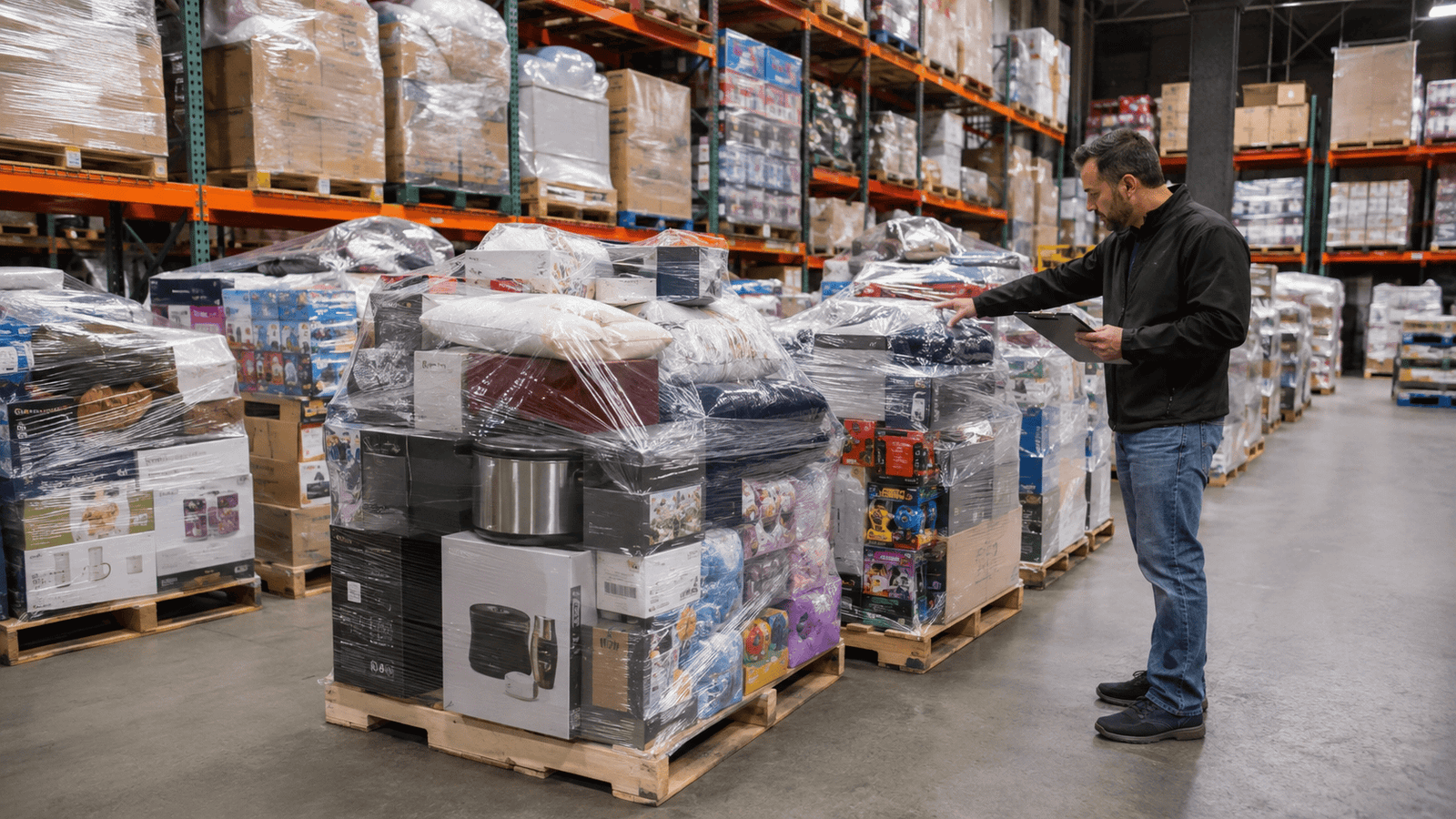
If you want to know how to buy overstock pallets, the basic process is simple: choose a product category, set a budget, find a reputable supplier, review the pallet details, calculate the total cost, place a small first order, and inspect the merchandise when it arrives. However, buying a pallet is not the same as buying a normal wholesale case. The products may vary in value, condition, brand, and demand. Shipping can also have a major effect on your final cost. A pallet that looks cheap at first may not be a good deal after fees and transportation. This guide explains how to buy overstock pallets, where to find them, how to evaluate listings, how to calculate potential profit, and how beginners can reduce unnecessary risk. By understanding how to buy overstock pallets and evaluating each deal carefully, you can make more informed purchasing decisions. What Are Overstock Pallets? An overstock pallet is a pallet of new merchandise that a retailer, manufacturer, distributor, or other business no longer needs in its regular inventory. The products are often unsold items rather than goods that customers have used and returned. However, the exact condition depends on the seller and listing, so you should always read the description carefully. Why Does Overstock Happen? Businesses can end up with excess inventory for many reasons, including: Seasonal products remaining after the season ends Canceled customer or wholesale orders Products being replaced by newer models Changes in packaging or branding Overstock from a slow-selling product Excess inventory from warehouse consolidation Products that are no longer needed at a particular location For example, imagine a retailer orders 1,000 kitchen organizers for a seasonal promotion but sells only 700. The remaining 300 units may become excess inventory. Rather than storing them indefinitely, the retailer may move the products through a liquidation or wholesale channel. Overstock vs. Customer Returns vs. Salvage These terms are important when learning how to buy overstock pallets. Overstock: Usually refers to excess inventory that was not sold through the normal retail channel. Condition can vary, but products may be new and unused. Customer returns: Products previously purchased by customers and later returned. Some may be unused, while others may have been opened, tested, damaged, or used. Salvage: Merchandise that generally has a higher level of damage, defects, missing parts, or other issues. It often requires more inspection or repair. There can also be shelf-pull merchandise. These are products removed from store shelves for reasons such as product changes, seasonal transitions, or inventory decisions. Do not assume every liquidation seller uses these terms in the same way. Always check the seller’s condition description. Common Products Found in Overstock Pallets Depending on the supplier, overstock pallets may contain: Home goods Kitchen products Clothing Shoes and accessories Toys Tools Small appliances Electronics Office supplies Pet products Seasonal merchandise Beauty and personal-care items The product category matters because it affects inspection, storage, shipping, demand, and resale value. Why Buy Overstock Pallets? If you’re learning how to buy overstock pallets, the main attraction is the possibility of purchasing merchandise in bulk for less than typical retail pricing. But a lower purchase price does not automatically mean profit. The real opportunity comes from buying products at a reasonable landed cost and selling them where customers are willing to pay enough to cover your expenses. Understanding how to buy overstock pallets helps you evaluate the complete cost before making a purchase. Lower Cost Than Retail A pallet buyer is purchasing multiple products together rather than buying each item at a retail store. This can create a lower per-unit acquisition cost. When researching how to buy overstock pallets, calculating the cost per unit is an important step. For example, suppose a pallet contains 100 usable products and costs $800 before shipping. The initial product cost is: $800 ÷ 100 = $8 per unit That does not mean every item is worth $8 or that every item will sell for a profit. You still need to account for shipping, fees, damaged units, packaging, and selling prices. Opportunity to Resell Resellers can separate pallet inventory into individual listings. A single pallet might contain 50, 100, or more units, depending on the category and packing method. Instead of selling the entire pallet, a reseller may sell products individually or in small bundles. Knowing how to buy overstock pallets can help you choose inventory that matches your preferred resale method. Variety of Merchandise Some buyers like overstock pallets because they can offer access to many products without purchasing directly from numerous manufacturers. For a small reseller, this can make product sourcing more flexible. However, anyone researching how to buy overstock pallets should still consider product demand, condition, and resale value before buying. Benefits for Small Businesses Overstock inventory may suit: Online sellers Local marketplace sellers Flea-market vendors Small retail stores Pop-up sellers Entrepreneurs testing a new product category However, beginners should avoid assuming that every pallet will produce a strong return. A careful approach to how to buy overstock pallets means evaluating both potential revenue and possible expenses. Potential Profit Margins Profit depends on several variables: Profit = Revenue − Total Costs Your total costs may include: Pallet purchase price Freight or delivery Marketplace fees Payment processing Packaging Storage Cleaning Repairs Returns Unsold inventory The goal is not simply to find the pallet with the highest advertised retail value. The goal is to find inventory with realistic resale demand at a cost that leaves room for expenses. How to Buy Overstock Pallets Step by Step If you are completely new to liquidation, follow a simple process instead of rushing into a large purchase. Step 1: Decide What Products You Want Start with categories you understand. For example, if you know a lot about home organization products, you may be better prepared to evaluate a home-goods pallet than a pallet of unfamiliar electronics. Consider: Your product knowledge Local demand Online demand Storage space Product size Shipping difficulty Inspection requirements Choosing one or two categories can make