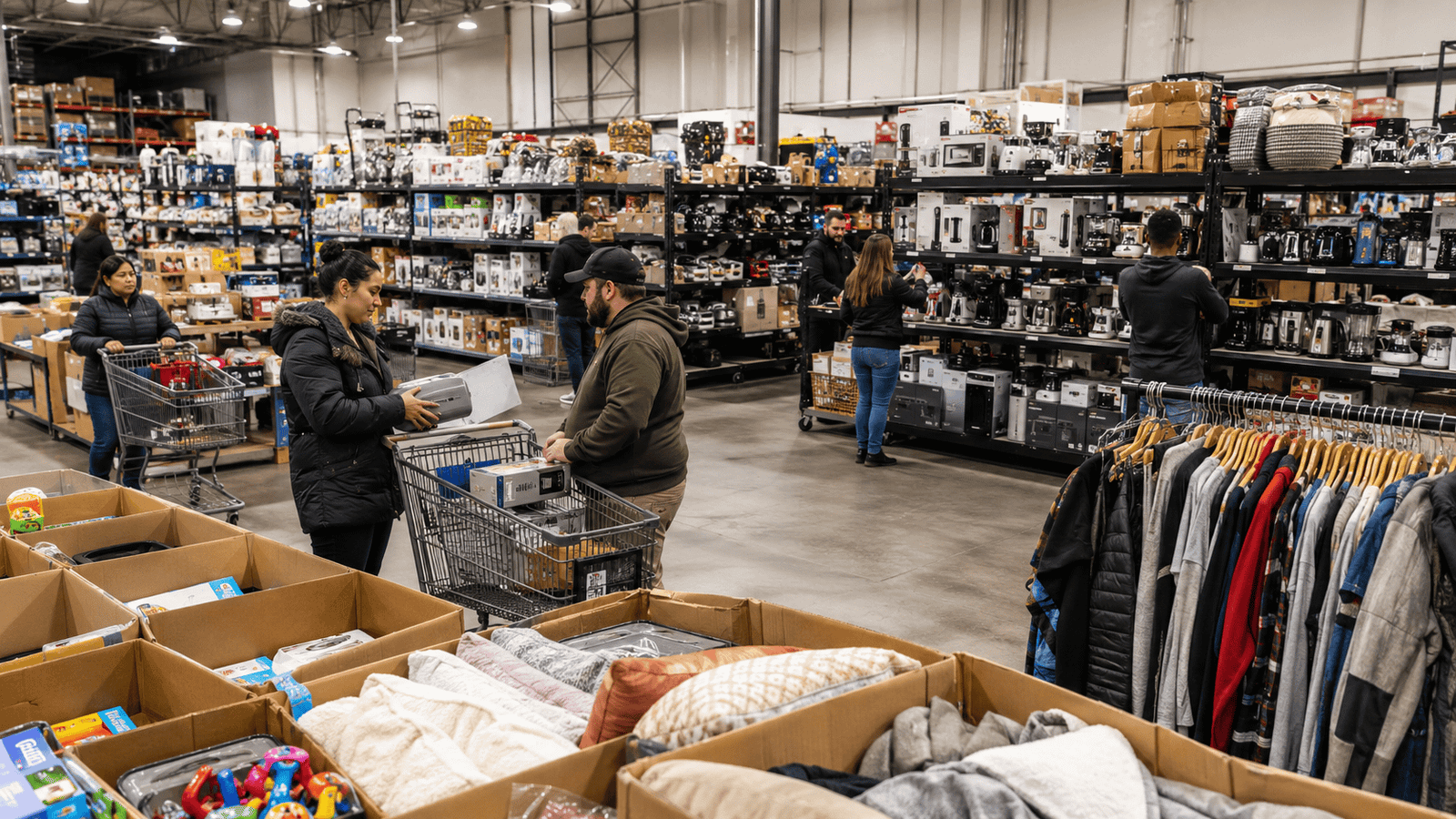
If you have ever seen a store selling brand-name products at unusually low prices, you may have wondered, what are liquidation stores and why are their prices so low? So, what are liquidation stores exactly? Liquidation stores sell merchandise that retailers, manufacturers, distributors, or other businesses need to move quickly. This inventory can come from customer returns, overstock, closeout merchandise, discontinued products, shelf-pulls, store closures, or business liquidations. Unlike a traditional retail store, a liquidation store may not have the same products every week. One visit might bring clothing and shoes, while the next could have small appliances, tools, toys, electronics, or home goods. Understanding what are liquidation stores can help shoppers know what to expect before making a purchase. The changing inventory is one of the main attractions of liquidation shopping. You may find useful products at prices far below normal retail prices, but you also need to understand the condition of the merchandise before buying. In this guide, we explain what are liquidation stores, how they work, what they sell, why their prices are low, whether they are legitimate, what liquidation pallets are, and how to reduce the risks when shopping. You will also learn how liquidation stores can be useful for people who want to resell merchandise. What Are Liquidation Stores? A liquidation store is a retail outlet or business that sells merchandise acquired through liquidation channels. The products are often sold below their original retail price because the seller wants to move inventory rather than keep it in regular retail stock. For example, imagine a retailer ordered 10,000 winter jackets but sold only 7,000 during the season. The remaining 3,000 jackets are excess inventory. Instead of storing them until the next winter, the retailer may sell the extra merchandise through a liquidation company. The liquidation company can then sell those jackets to another business, such as a liquidation warehouse, discount store, online seller, or reseller. How Are Liquidation Stores Different From Regular Retail Stores? Traditional retail stores usually purchase products through planned supply chains and sell them at prices designed to cover costs and generate a profit. Liquidation stores often operate differently. Their inventory can come from many sources, and the quantity and product selection can change frequently. Some products may be brand new, while others may be customer returns or products with damaged packaging. A regular retail store might stock the same popular product for months. A liquidation store may sell an item once and never receive it again. This means liquidation shopping is less predictable. You may need to inspect products carefully and make decisions based on what is available that day. Why Are Liquidation Products Cheaper? The original owner may no longer need the inventory at its original retail value. A retailer might have too much stock. A manufacturer might discontinue a product. A store might close. An online customer might return an item. Rather than keeping the merchandise in storage, the business can sell it in bulk or through a liquidation channel. The next buyer can purchase the merchandise for less and potentially pass some of those savings to customers. However, a low price does not automatically mean a great deal. Product condition, missing parts, shipping costs, warranties, and return policies can all affect the real value. How Do Liquidation Stores Work? Liquidation stores depend on a supply of unwanted, excess, returned, or discontinued merchandise. The process can vary by seller, but it generally involves several steps. A retailer or other business identifies inventory that it no longer wants to keep. That inventory may be sold to a liquidation company, wholesaler, auction marketplace, warehouse, or another buyer. The merchandise is then sorted, graded, packaged, or sold in bulk. Some liquidation businesses sell individual products to consumers. Others sell cases, lots, or pallets to resellers. Here are some of the most common sources of liquidation inventory. Retail Returns Customer returns are a major source of liquidation merchandise. A product can be returned for many reasons. The customer may have changed their mind, ordered the wrong size, received the wrong item, or decided that the product was not suitable. Some returned products are still in excellent condition. Others may have been opened or used. For this reason, return merchandise can have different condition grades. Always ask how a seller defines its condition categories before purchasing. Overstock and Excess Inventory Overstock occurs when a business has more products than it needs. This can happen because of inaccurate sales forecasts, seasonal demand, canceled orders, or changes in customer preferences. For example, a retailer may have thousands of phone cases for a smartphone model that is no longer popular. The retailer may choose to sell the remaining inventory to a liquidation buyer instead of keeping it in storage. Closeout Merchandise Closeout merchandise is inventory that a retailer wants to clear from its shelves. A store may be changing its product selection or making room for newer models. Closeout products can sometimes be new and unused, but shoppers should still check the seller’s description and return policy. Shelf-Pulls and Discontinued Products Shelf-pulls are products removed from store shelves. They may be new, but packaging can sometimes show signs of handling. Products can also be discontinued because a retailer or manufacturer no longer wants to carry them. Discontinued products can be attractive to shoppers looking for items that are difficult to find in normal retail stores. Store Closures and Business Liquidations When a business closes, it may need to sell its remaining inventory. This can include furniture, equipment, clothing, electronics, tools, office supplies, and other merchandise. Business liquidation can happen through direct sales, liquidation companies, or auctions. What Do Liquidation Stores Sell? There is no single product category that defines a liquidation store. Inventory depends on where the merchandise came from and what the seller currently has available. Common categories include: Clothing and Shoes Liquidation stores may sell shirts, pants, jackets, dresses, shoes, bags, accessories, and other apparel. Some items may be new with tags. Others may be