If you want to know how to buy overstock pallets, the basic process is simple: choose a product category, set a budget, find a reputable supplier, review the pallet details, calculate the total cost, place a small first order, and inspect the merchandise when it arrives.
However, buying a pallet is not the same as buying a normal wholesale case. The products may vary in value, condition, brand, and demand. Shipping can also have a major effect on your final cost. A pallet that looks cheap at first may not be a good deal after fees and transportation.
This guide explains how to buy overstock pallets, where to find them, how to evaluate listings, how to calculate potential profit, and how beginners can reduce unnecessary risk. By understanding how to buy overstock pallets and evaluating each deal carefully, you can make more informed purchasing decisions.
What Are Overstock Pallets?
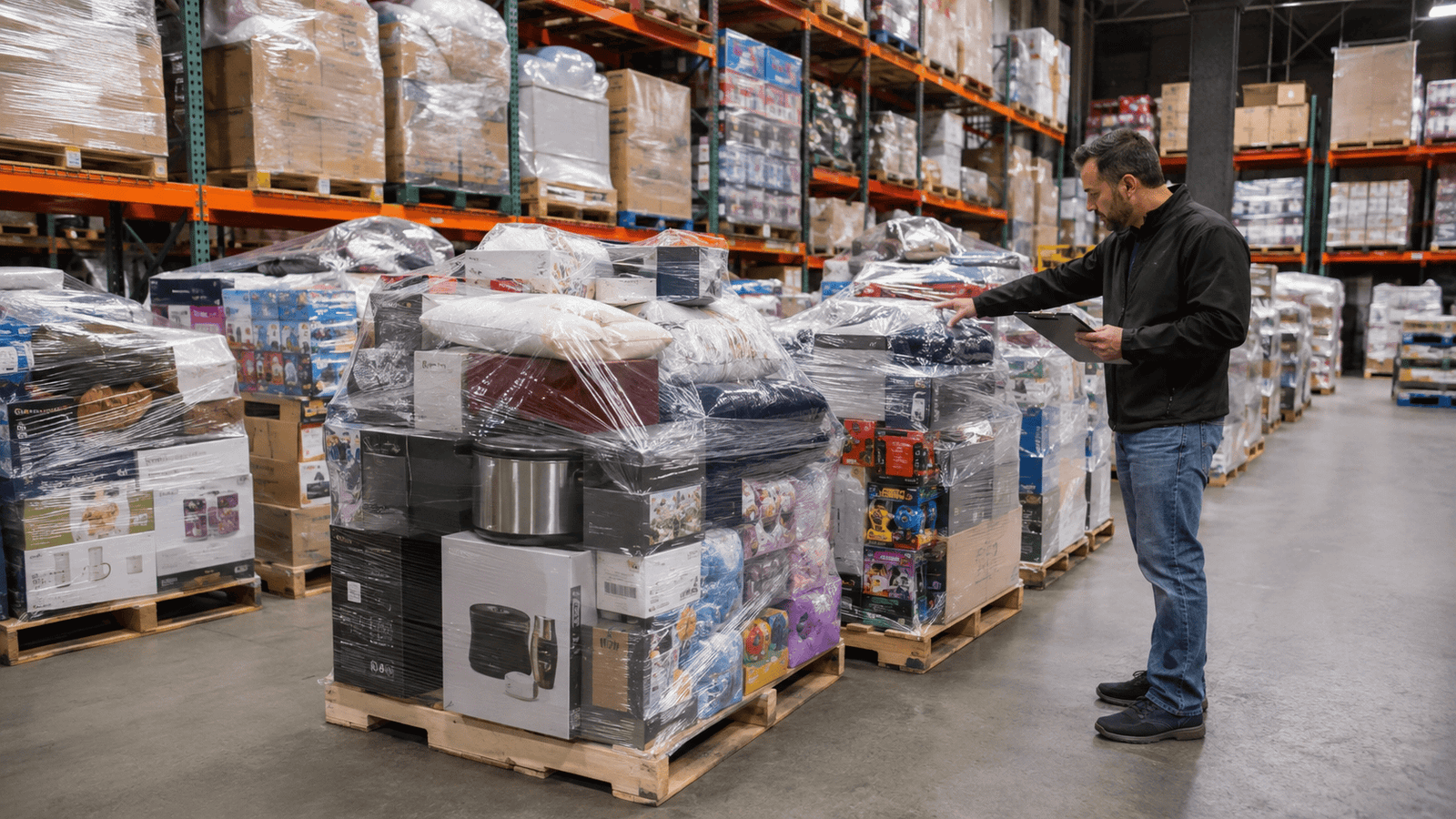
An overstock pallet is a pallet of new merchandise that a retailer, manufacturer, distributor, or other business no longer needs in its regular inventory.
The products are often unsold items rather than goods that customers have used and returned. However, the exact condition depends on the seller and listing, so you should always read the description carefully.
Why Does Overstock Happen?
Businesses can end up with excess inventory for many reasons, including:
- Seasonal products remaining after the season ends
- Canceled customer or wholesale orders
- Products being replaced by newer models
- Changes in packaging or branding
- Overstock from a slow-selling product
- Excess inventory from warehouse consolidation
- Products that are no longer needed at a particular location
For example, imagine a retailer orders 1,000 kitchen organizers for a seasonal promotion but sells only 700. The remaining 300 units may become excess inventory. Rather than storing them indefinitely, the retailer may move the products through a liquidation or wholesale channel.
Overstock vs. Customer Returns vs. Salvage
These terms are important when learning how to buy overstock pallets.
Overstock: Usually refers to excess inventory that was not sold through the normal retail channel. Condition can vary, but products may be new and unused.
Customer returns: Products previously purchased by customers and later returned. Some may be unused, while others may have been opened, tested, damaged, or used.
Salvage: Merchandise that generally has a higher level of damage, defects, missing parts, or other issues. It often requires more inspection or repair.
There can also be shelf-pull merchandise. These are products removed from store shelves for reasons such as product changes, seasonal transitions, or inventory decisions.
Do not assume every liquidation seller uses these terms in the same way. Always check the seller’s condition description.
Common Products Found in Overstock Pallets
Depending on the supplier, overstock pallets may contain:
- Home goods
- Kitchen products
- Clothing
- Shoes and accessories
- Toys
- Tools
- Small appliances
- Electronics
- Office supplies
- Pet products
- Seasonal merchandise
- Beauty and personal-care items
The product category matters because it affects inspection, storage, shipping, demand, and resale value.
Why Buy Overstock Pallets?
If you’re learning how to buy overstock pallets, the main attraction is the possibility of purchasing merchandise in bulk for less than typical retail pricing.
But a lower purchase price does not automatically mean profit. The real opportunity comes from buying products at a reasonable landed cost and selling them where customers are willing to pay enough to cover your expenses. Understanding how to buy overstock pallets helps you evaluate the complete cost before making a purchase.
Lower Cost Than Retail
A pallet buyer is purchasing multiple products together rather than buying each item at a retail store.
This can create a lower per-unit acquisition cost. When researching how to buy overstock pallets, calculating the cost per unit is an important step.
For example, suppose a pallet contains 100 usable products and costs $800 before shipping. The initial product cost is:
$800 ÷ 100 = $8 per unit
That does not mean every item is worth $8 or that every item will sell for a profit. You still need to account for shipping, fees, damaged units, packaging, and selling prices.
Opportunity to Resell
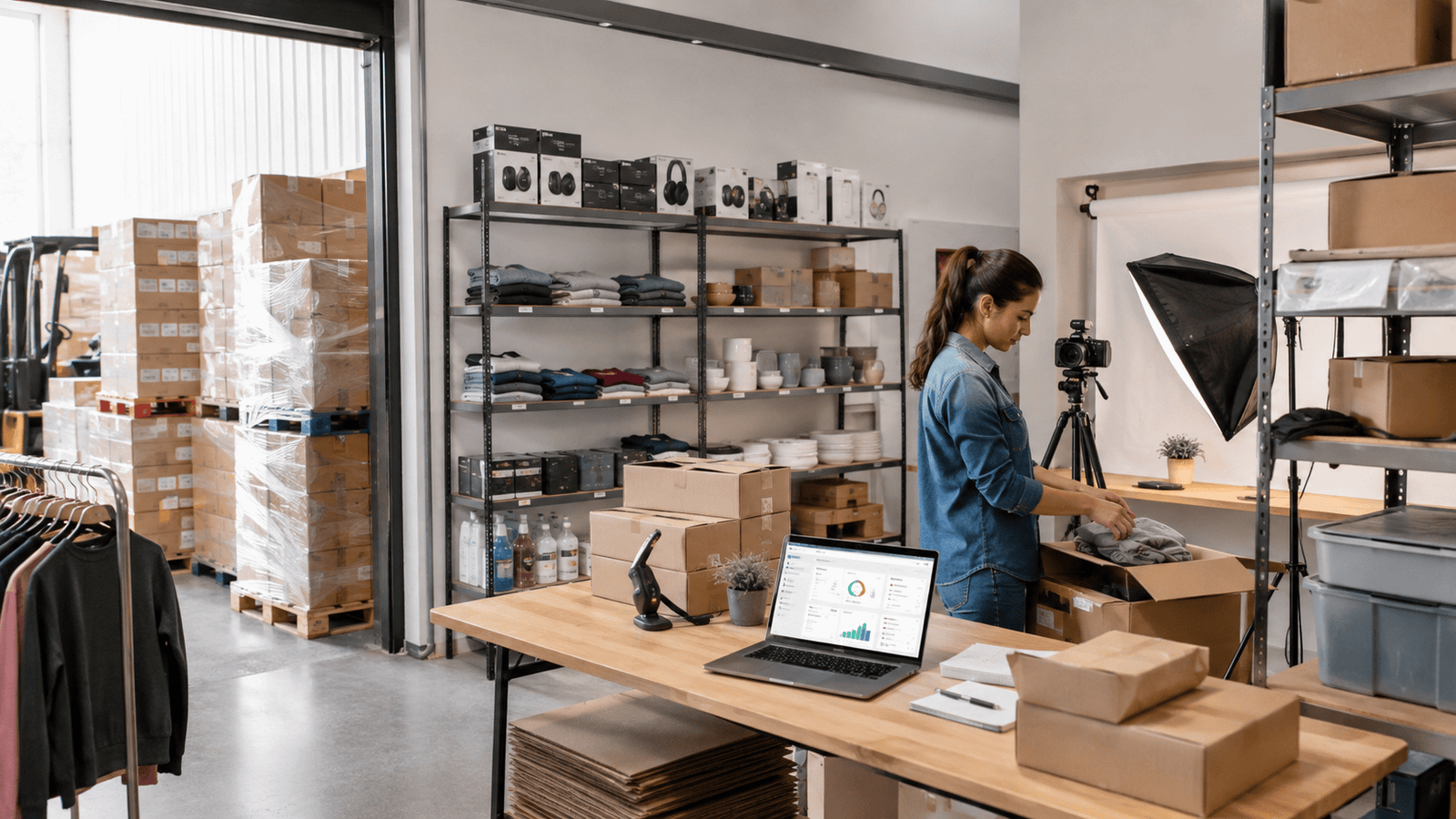
Resellers can separate pallet inventory into individual listings.
A single pallet might contain 50, 100, or more units, depending on the category and packing method. Instead of selling the entire pallet, a reseller may sell products individually or in small bundles. Knowing how to buy overstock pallets can help you choose inventory that matches your preferred resale method.
Variety of Merchandise
Some buyers like overstock pallets because they can offer access to many products without purchasing directly from numerous manufacturers.
For a small reseller, this can make product sourcing more flexible. However, anyone researching how to buy overstock pallets should still consider product demand, condition, and resale value before buying.
Benefits for Small Businesses
Overstock inventory may suit:
- Online sellers
- Local marketplace sellers
- Flea-market vendors
- Small retail stores
- Pop-up sellers
- Entrepreneurs testing a new product category
However, beginners should avoid assuming that every pallet will produce a strong return. A careful approach to how to buy overstock pallets means evaluating both potential revenue and possible expenses.
Potential Profit Margins
Profit depends on several variables:
Profit = Revenue − Total Costs
Your total costs may include:
- Pallet purchase price
- Freight or delivery
- Marketplace fees
- Payment processing
- Packaging
- Storage
- Cleaning
- Repairs
- Returns
- Unsold inventory
The goal is not simply to find the pallet with the highest advertised retail value. The goal is to find inventory with realistic resale demand at a cost that leaves room for expenses.
How to Buy Overstock Pallets Step by Step
If you are completely new to liquidation, follow a simple process instead of rushing into a large purchase.
Step 1: Decide What Products You Want
Start with categories you understand.
For example, if you know a lot about home organization products, you may be better prepared to evaluate a home-goods pallet than a pallet of unfamiliar electronics.
Consider:
- Your product knowledge
- Local demand
- Online demand
- Storage space
- Product size
- Shipping difficulty
- Inspection requirements
Choosing one or two categories can make your first purchase easier to manage.
Step 2: Set a Realistic Budget
Decide how much you can comfortably spend.
Your budget should include more than the advertised pallet price.
A useful starting formula is:
Maximum budget = pallet price + shipping + expected fees + operating reserve
Keep some money available for unexpected costs.
If a pallet costs $600 but shipping is another $300, your actual acquisition cost is already $900.
Step 3: Find Reputable Liquidation Suppliers
Look for established liquidation marketplaces, warehouses, wholesalers, auctions, and other legitimate sellers.
Before purchasing, investigate the company.
Check:
- Business information
- Contact details
- Customer reviews
- Product descriptions
- Terms and conditions
- Payment methods
- Shipping policies
- Return policies
A professional-looking website alone is not proof that a seller is reliable.
Step 4: Compare Pallet Listings
Do not buy the first pallet you see.
Compare several listings based on:
- Number of units
- Product category
- Condition
- Brands
- Estimated retail value
- Manifest availability
- Purchase price
- Shipping
- Seller fees
A $700 pallet is not necessarily better than a $900 pallet if the second pallet contains products with stronger demand and lower handling costs.
Step 5: Check the Manifest When Available
A manifest lists the products expected to be included in the pallet.
It may provide information such as:
- Product names
- Model numbers
- Quantities
- Suggested retail prices
- Item conditions
- Other inventory details
A manifest can make it easier to research potential resale value.
Step 6: Review Condition
Look closely at whether the merchandise is described as:
- New
- New in box
- Open box
- Shelf pull
- Customer return
- Used
- Salvage
Do not assume that the word “liquidation” means the products are damaged. It also does not guarantee that they are new.
Read the condition notes for each listing.
Step 7: Calculate Shipping and Other Fees
Shipping can dramatically change your costs.
Ask:
- Is shipping included?
- Is freight charged separately?
- Is liftgate service required?
- Will the pallet be delivered to a residential address?
- Are there additional handling fees?
Know the final expected cost before placing the order.
Step 8: Place a Small First Order
If possible, start with one pallet.
Your first purchase should help you learn:
- How accurate the listing is
- How the supplier packs products
- How much work inspection requires
- What products actually sell
- How long it takes to recover your money
Once you understand the process, you can decide whether larger purchases make sense.
Step 9: Inspect the Pallet After Delivery
When the pallet arrives, inspect it carefully.
Check:
- Number of boxes
- Product quantity
- Visible damage
- Packaging
- Product condition
- Missing parts
- Model numbers
- Serial numbers where relevant
- Expiration dates where applicable
Take photographs during the inspection and keep your purchase records.
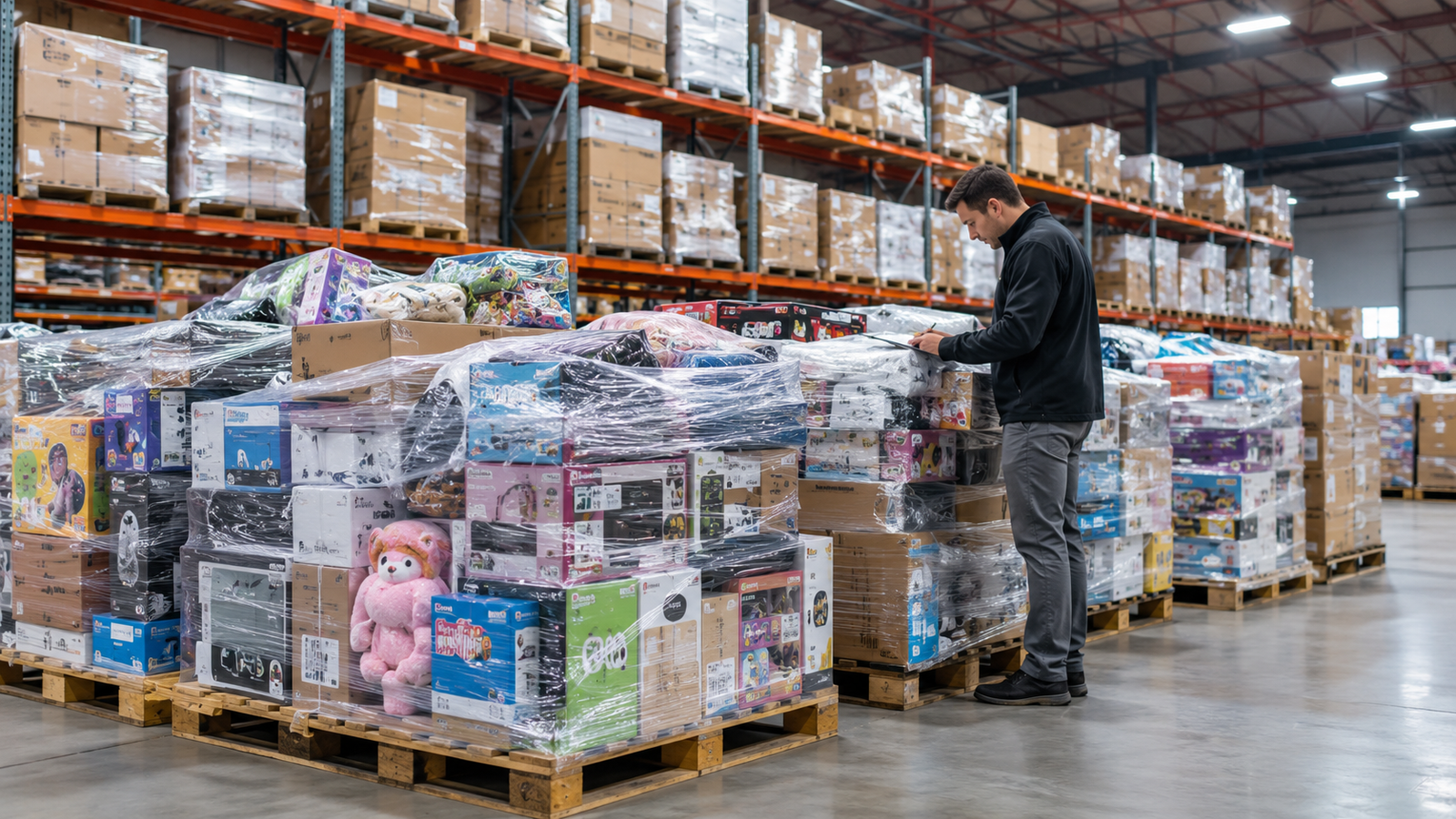
Where to Buy Overstock Pallets
There are several ways to source overstock merchandise.
Liquidation Warehouses
Local liquidation warehouses may allow buyers to inspect inventory before purchasing.
This can be useful because you can see the physical condition rather than relying entirely on photographs.
Some warehouses sell individual items, cases, or full pallets.
Online Liquidation Marketplaces
Online liquidation marketplaces connect businesses with bulk inventory.
Depending on the platform, you may find:
- Overstock
- Returns
- Shelf pulls
- Store inventory
- Mixed merchandise
- Bulk lots
Read the marketplace’s terms carefully. Different platforms can have different rules for shipping, bidding, refunds, and manifests.
Retailer Liquidation Programs
Large retailers sometimes move excess inventory through liquidation channels.
These programs can provide access to merchandise from recognizable retail supply chains, but availability and purchasing requirements vary.
Wholesale Suppliers
Some wholesalers specialize in excess inventory and closeout merchandise.
When comparing suppliers, focus on transparency rather than just low prices.
Local Liquidation Stores
Local stores can be convenient for smaller buyers.
They may sell:
- Individual products
- Boxes
- Small lots
- Pallets
The advantage is that transportation can be simpler when the inventory is nearby.
Auctions
Liquidation auctions can offer bulk lots at changing prices.
Remember that winning an auction means committing to the purchase. Include buyer premiums, shipping, taxes, and other charges in your maximum bid.
Direct Purchases From Businesses
In some cases, businesses may sell excess stock directly.
This could include manufacturers, distributors, retailers, or local companies changing their inventory.
Direct buying can work well when you have a clear understanding of the merchandise and the seller.
How to Choose a Reliable Overstock Pallet Seller
Choosing the seller is one of the most important parts of learning how to buy overstock pallets safely.
Check Seller Reputation
Search for independent customer feedback.
Look for patterns rather than focusing on one review.
Repeated complaints about inaccurate descriptions, damaged merchandise, poor communication, or unexpected fees deserve attention.
Verify Business Information
Check whether the company provides:
- Business name
- Physical or mailing address
- Customer service contact
- Clear purchasing terms
- Shipping information
Be cautious when basic business information is difficult to verify.
Look for Clear Product Descriptions
A good listing should explain what you are buying.
You should understand:
- Product category
- Quantity
- Condition
- Brand information
- Estimated value, if provided
- Shipping terms
Check Return and Refund Policies
Liquidation purchases often have specific terms.
Some sales may be final. Others may allow claims under certain conditions.
Read the policy before paying.
Understand Payment Options
Use payment methods and purchasing systems that provide appropriate transaction records and buyer protections where available.
Avoid sending money through unusual payment methods simply because a seller promises a much lower price.
Avoid Unrealistic Deals
A listing claiming extremely valuable merchandise for an unusually tiny price deserves careful investigation.
Ask yourself:
Why would this inventory be sold so far below comparable market prices?
A good deal can exist, but the numbers should still make sense.
What to Check Before Buying an Overstock Pallet
Before placing an order, use a checklist.
Product Condition
Confirm whether products are new, open-box, shelf pulls, returns, used, or salvage.
Brand and Product Type
Some brands and product categories have stronger resale demand than others.
Research the exact product when possible.
Quantity
A pallet with 200 low-demand products may be less useful than one with 50 products that have strong demand.
Estimated Retail Value
Retail value can help provide context, but it should not be treated as guaranteed resale revenue.
Manifest Availability
A manifest can help you research individual products.
An unmanifested pallet carries more uncertainty because you may not know exactly what is inside.
Expiration Dates
For products such as food, cosmetics, supplements, or certain personal-care goods, check expiration or best-before information where applicable.
Shipping Costs
Calculate freight before you buy.
Seller Fees
Look for:
- Buyer premiums
- Handling fees
- Processing fees
- Storage fees
- Other transaction costs
Minimum Order Requirements
Some suppliers may require buyers to purchase multiple pallets or meet other minimums.
Understanding Overstock Pallet Manifests
A pallet manifest is an inventory list describing the expected contents of a pallet or lot.
A manifest might look something like this:
| Product | Quantity | Listed Retail Value |
|---|---|---|
| Kitchen organizer | 20 | $400 |
| Storage container | 30 | $450 |
| Desk accessory | 25 | $375 |
| Small home item | 25 | $500 |
The total listed retail value would be $1,725 in this example.
But that number does not mean you can sell everything for $1,725.
MSRP vs. Actual Resale Value
MSRP or retail value is different from the price customers are actually willing to pay.
If an item has a suggested retail price of $40 but similar sellers are listing it for $22, your realistic selling price may be closer to the current market price.
Always research comparable listings and recent sales data when available.
Can a Manifest Be Wrong?
Inventory information may contain errors.
Products can be missing, quantities can differ, and descriptions may not perfectly match the delivered goods.
This is one reason to understand the seller’s terms before buying.
A Manifest Does Not Guarantee Profit
A manifest is a research tool, not a profit guarantee.
Even if every listed product arrives, you still need to consider:
- Market demand
- Selling fees
- Shipping
- Competition
- Product condition
- Time required to list products
- Returns
- Unsold inventory
How Much Do Overstock Pallets Cost?
There is no single standard price for an overstock pallet.
The cost can vary widely based on the merchandise and seller.
Important factors include:
Product Category
Electronics, tools, branded clothing, furniture, home goods, and toys can have very different values.
Brand Value
Recognized brands may have stronger resale demand, although brand name alone does not guarantee sales.
Condition
New merchandise can have a different value from open-box or returned goods.
Quantity
More units generally affect the total purchase price, but quantity alone should not determine whether a pallet is a good deal.
Shipping Distance
A pallet traveling a long distance can cost much more to receive.
Manifested vs. Unmanifested
A manifested pallet provides more information. An unmanifested pallet can carry greater uncertainty.
Calculate Your Total Cost
Use:
Total Cost = Purchase Price + Shipping + Fees + Other Direct Costs
For example:
- Pallet: $700
- Freight: $250
- Fees: $50
Total cost = $1,000
If there are 100 sellable units, your average cost is:
$1,000 ÷ 100 = $10 per sellable unit
This number is much more useful than looking at the $700 pallet price alone.
How to Calculate Potential Profit
Before buying, create a simple profit estimate.
Suppose you purchase a pallet for $700.
Other costs:
- Shipping: $250
- Packaging: $50
- Cleaning/repair: $50
- Selling fees: $150
Your total cost is:
$700 + $250 + $50 + $50 + $150 = $1,200
Now suppose your expected total sales revenue is $1,600.
Estimated profit:
$1,600 − $1,200 = $400
That is a simplified estimate. Actual profit could be lower if some products do not sell, buyers request refunds, or unexpected costs appear.
Use Conservative Selling Prices
Do not base your estimate on the highest listing you can find.
Instead, look for realistic comparable prices.
If similar products regularly sell for $18–$22, using $22 for every item may make your projection too optimistic.
A conservative estimate provides a better basis for deciding whether to buy.
Overstock Pallets vs. Other Liquidation Pallets
Understanding the differences can help beginners choose more suitable inventory.
Overstock vs. Customer Returns
Overstock is generally excess inventory, while customer returns have previously been purchased and returned.
For a beginner, overstock may be easier to understand when the listing clearly states that the products are new and unused.
Returns can require more inspection.
Overstock vs. Shelf Pulls
Shelf pulls are products removed from store shelves.
They may be new but could have packaging wear from handling or display.
Overstock vs. Salvage
Salvage typically carries more risk because products may require repairs or have significant damage.
Beginners who do not have repair skills may want to avoid high-risk salvage lots.
Which Is Better for Beginners?
There is no universal answer.
However, a clearly described pallet of new overstock with a reliable manifest can be easier for a beginner to evaluate than an unmanifested salvage pallet.
Best Products to Buy in Overstock Pallets
The best category depends on your skills, market, budget, and selling channel.
Home Goods
Storage products, kitchen accessories, organization items, and basic household products can be relatively straightforward to inspect.
Clothing and Accessories
Clothing can be attractive because individual products are easy to separate and list.
However, sizes, styles, brands, seasons, and trends affect demand.
Electronics
Electronics can have strong demand, but they require careful testing.
Check:
- Power
- Function
- Accessories
- Compatibility
- Model number
- Physical condition
Tools
Hand tools and some small tools can be easier to inspect than complex electronics.
Toys
Toys can work well when they are complete, safe, and appropriate for current demand.
Check packaging and included components.
Small Appliances
Small appliances may offer good resale opportunities, but testing is important.
Consider storage and shipping costs too.
Seasonal Merchandise
Seasonal products can be attractive at the right time of year.
However, timing matters. Inventory bought after the season may need to be stored until demand returns.
Easier-to-Inspect Products
For your first pallet, consider products where you can quickly determine:
- What the product is
- Whether it works
- What it is worth
- Whether customers want it
- How much it costs to ship
This can make your first buying experience easier.
Common Mistakes to Avoid
Buying Based Only on Retail Value
A pallet advertised with $5,000 in retail value does not mean you will make $5,000 in sales.
Retail price and resale price are different.
Ignoring Shipping
A cheap pallet can become expensive after freight.
Always calculate the delivered cost.
Buying Without Researching the Seller
Do not skip seller research just because the inventory looks attractive.
A good product is not useful if the transaction itself is unreliable.
Choosing an Unmanifested Pallet Without Understanding the Risk
Mystery inventory can be unpredictable.
If you choose an unmanifested pallet, understand that you have less information before purchasing.
Failing to Research Resale Demand
Do not assume that people will buy a product simply because it is inexpensive.
Research the product category and comparable selling prices.
Spending Too Much on Your First Purchase
Your first pallet should be a learning experience.
Avoid risking money you cannot afford to have tied up in inventory.
Tips for First-Time Overstock Pallet Buyers
Start With One Pallet
One pallet lets you learn the process without taking on a large inventory risk.
Choose Products You Understand
Product knowledge helps you spot missing parts, outdated models, poor condition, and unrealistic pricing.
Research Comparable Prices
Check current marketplace prices before purchasing.
Do not rely only on MSRP.
Keep Detailed Records
Track:
- Purchase price
- Shipping
- Fees
- Inventory quantity
- Selling price
- Marketplace fees
- Packaging
- Profit
- Unsold products
Good records show you which categories actually work for your business.
Inspect Products Carefully
Sort your inventory into groups such as:
- Ready to sell
- Needs cleaning
- Needs testing
- Needs repair
- Missing parts
- Not suitable for resale
Have a Resale Plan Before Buying
Know where you will sell the merchandise.
A pallet should not arrive before you have thought about your selling channels.
Reinvest Carefully
If your first pallet performs well, consider growing gradually.
Do not immediately spend all your profits on a much larger purchase.
How to Resell Overstock Merchandise
Once you receive your pallet, the next step is turning inventory into sales.
eBay
eBay can work well for individual products that buyers search for by brand, model, or product name.
Create clear listings with:
- Accurate titles
- Good photos
- Product details
- Condition information
- Shipping information
Facebook Marketplace
Facebook Marketplace can be useful for local sales, particularly for products that are bulky or expensive to ship.
Local Marketplaces
Depending on your location, local classified platforms and community marketplaces may provide additional sales channels.
Your Own Online Store
An online store gives you more control over your storefront and customer experience.
However, you may need to generate your own traffic and handle more aspects of the sales process.
Flea Markets and Local Sales
Flea markets can work well for low- to medium-priced merchandise where customers prefer to see products in person.
Bundle Related Products
Bundling can help move complementary products together.
For example, several related kitchen organization products could potentially be sold as one bundle instead of separate listings.
Price Competitively
Research comparable products and consider:
- Current market prices
- Product condition
- Shipping
- Your costs
- Competitor pricing
Avoid setting prices based solely on what you originally paid.
Is Buying Overstock Pallets Worth It?
Buying overstock pallets can be worthwhile, but it is not a guaranteed way to make money.
The strongest opportunities usually come from careful sourcing rather than simply buying the cheapest pallet.
Advantages
Potential benefits include:
- Bulk inventory
- Lower acquisition cost
- Access to varied products
- Resale opportunities
- Flexible selling channels
- Ability to test different categories
Potential Risks
You may also face:
- Unsold products
- Lower-than-expected resale prices
- Shipping costs
- Damaged merchandise
- Missing items
- Inaccurate inventory information
- Storage problems
- Marketplace fees
- Slow sales
Who Should Consider Buying?
Overstock pallets may suit people who:
- Enjoy buying and reselling
- Have storage space
- Can research products
- Have a clear sales channel
- Can manage inventory
- Understand basic profit calculations
When Might It Not Be a Good Fit?
It may not be suitable if you:
- Have no storage space
- Need guaranteed returns
- Cannot afford inventory to remain unsold
- Do not have time to inspect and list products
- Are unwilling to research suppliers
- Are relying entirely on advertised retail value
The key is to treat pallet buying as an inventory business rather than a guaranteed bargain.
FAQ
How do I buy overstock pallets?
If you’re wondering how to buy overstock pallets, start by choosing a product category and setting a budget. Then find a reputable liquidation supplier, compare listings, review the manifest and condition, calculate shipping and fees, and place a small first order. Inspect the merchandise when it arrives.
Where is the best place to buy overstock pallets?
There is no single best source for every buyer. Liquidation warehouses, online marketplaces, wholesale suppliers, auctions, local liquidation stores, and direct business sales can all be useful. The best option is one that provides clear inventory information, reasonable terms, and a total cost that fits your resale plan.
Are overstock pallets profitable?
They can be profitable, but profitability is not guaranteed. Your result depends on purchase cost, shipping, fees, product condition, resale demand, selling prices, and how much inventory actually sells. Understanding how to buy overstock pallets can help you evaluate these factors before investing.
Can I buy overstock pallets online?
Yes. Online liquidation marketplaces and wholesale suppliers offer pallet lots in many product categories. If you want to learn how to buy overstock pallets online, review the seller’s terms, condition descriptions, shipping charges, and available inventory information before ordering.
Do overstock pallets come with manifests?
Some do, and some do not. A manifested pallet includes an inventory list with information about expected contents. Unmanifested pallets provide less information and therefore require greater tolerance for uncertainty when learning how to buy overstock pallets.
How much does an overstock pallet cost?
There is no fixed price. Cost depends on the product category, quantity, brand, condition, location, shipping, seller fees, and whether the pallet is manifested. When researching how to buy overstock pallets, always calculate the total delivered cost rather than looking only at the advertised pallet price.
What should I look for before buying a pallet?
Check the product condition, quantity, brands, manifest, estimated value, resale demand, shipping cost, seller fees, return policy, and minimum order requirements. Research the seller before making payment. These checks are especially important when learning how to buy overstock pallets for the first time.
Are overstock pallets better than customer return pallets?
Neither is automatically better. Overstock may be easier for beginners to evaluate when products are clearly described as new, while customer returns can require more testing and inspection. The right choice depends on your budget, experience, and ability to handle product-condition risk. Knowing how to buy overstock pallets also means understanding the differences between inventory conditions.
Conclusion
Learning how to buy overstock pallets starts with one simple rule: look at the entire deal, not just the pallet price.
Choose a product category you understand, set a realistic budget, research reputable sellers, compare listings, and check the manifest when one is available. Pay close attention to product condition and calculate shipping, fees, packaging, and other costs before placing an order.
For a first purchase, starting with one pallet is often a sensible approach. Inspect every item, track your costs, research realistic resale prices, and learn which products actually sell. This practical approach makes how to buy overstock pallets easier to understand and can help you avoid costly mistakes.
Most importantly, do not confuse advertised retail value with guaranteed profit. A successful pallet purchase is one where the merchandise, total cost, resale demand, and level of risk all make sense.
If you approach overstock pallets as a careful inventory-buying decision rather than a quick bargain, you can make better purchasing choices and build your resale operation step by step. Once you understand how to buy overstock pallets, focus on improving your supplier research, cost calculations, and resale strategy over time.


[…] reseller may purchase a pallet, sort the products, and sell individual items through online or local […]