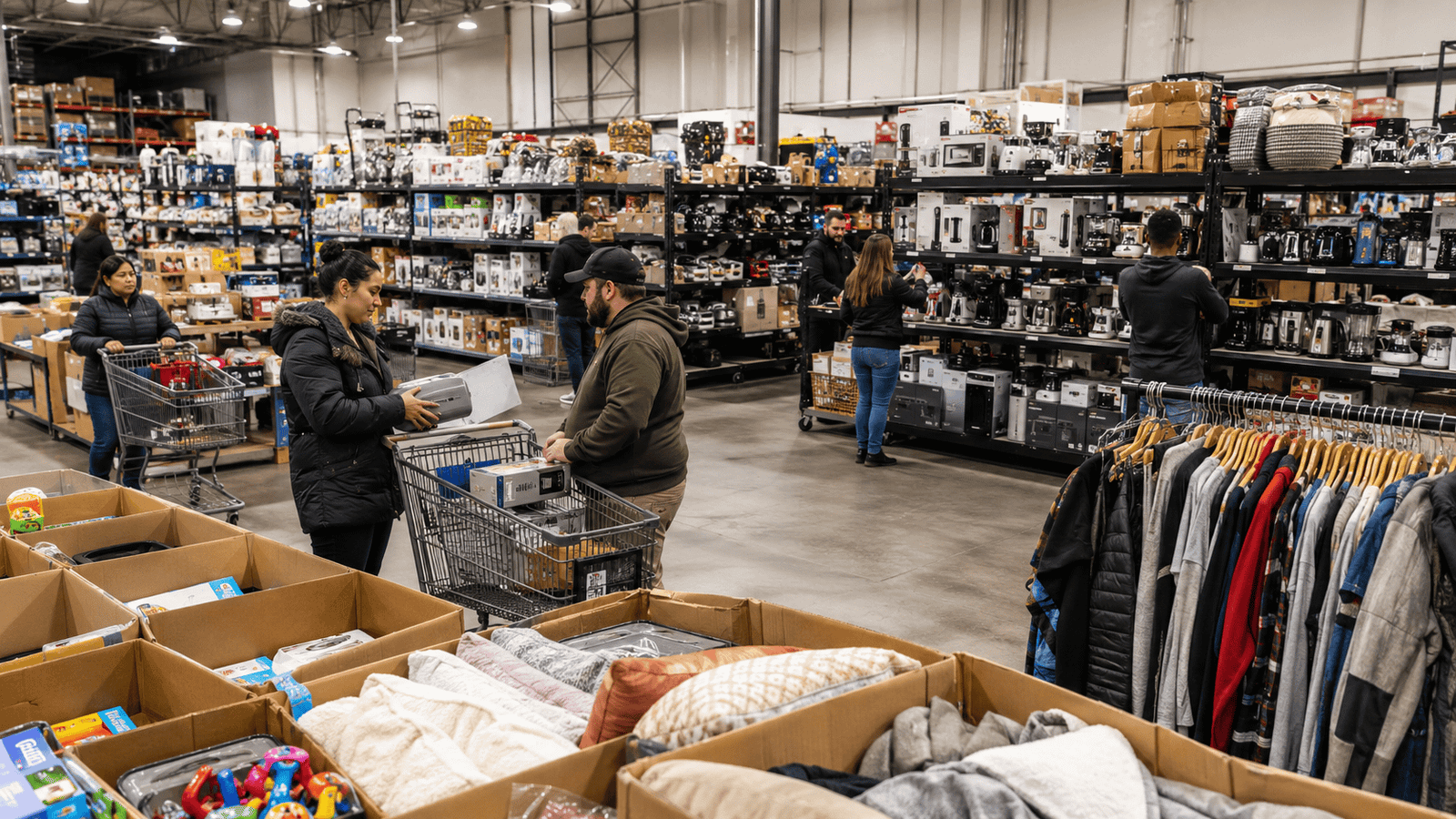
If you have ever seen a store selling brand-name products at unusually low prices, you may have wondered, what are liquidation stores and why are their prices so low?
So, what are liquidation stores exactly? Liquidation stores sell merchandise that retailers, manufacturers, distributors, or other businesses need to move quickly. This inventory can come from customer returns, overstock, closeout merchandise, discontinued products, shelf-pulls, store closures, or business liquidations.
Unlike a traditional retail store, a liquidation store may not have the same products every week. One visit might bring clothing and shoes, while the next could have small appliances, tools, toys, electronics, or home goods.
Understanding what are liquidation stores can help shoppers know what to expect before making a purchase. The changing inventory is one of the main attractions of liquidation shopping. You may find useful products at prices far below normal retail prices, but you also need to understand the condition of the merchandise before buying.
In this guide, we explain what are liquidation stores, how they work, what they sell, why their prices are low, whether they are legitimate, what liquidation pallets are, and how to reduce the risks when shopping. You will also learn how liquidation stores can be useful for people who want to resell merchandise.
What Are Liquidation Stores?
A liquidation store is a retail outlet or business that sells merchandise acquired through liquidation channels. The products are often sold below their original retail price because the seller wants to move inventory rather than keep it in regular retail stock.
For example, imagine a retailer ordered 10,000 winter jackets but sold only 7,000 during the season. The remaining 3,000 jackets are excess inventory. Instead of storing them until the next winter, the retailer may sell the extra merchandise through a liquidation company.
The liquidation company can then sell those jackets to another business, such as a liquidation warehouse, discount store, online seller, or reseller.
How Are Liquidation Stores Different From Regular Retail Stores?
Traditional retail stores usually purchase products through planned supply chains and sell them at prices designed to cover costs and generate a profit.
Liquidation stores often operate differently.
Their inventory can come from many sources, and the quantity and product selection can change frequently. Some products may be brand new, while others may be customer returns or products with damaged packaging.
A regular retail store might stock the same popular product for months. A liquidation store may sell an item once and never receive it again.
This means liquidation shopping is less predictable.
You may need to inspect products carefully and make decisions based on what is available that day.
Why Are Liquidation Products Cheaper?
The original owner may no longer need the inventory at its original retail value.
A retailer might have too much stock. A manufacturer might discontinue a product. A store might close. An online customer might return an item.
Rather than keeping the merchandise in storage, the business can sell it in bulk or through a liquidation channel.
The next buyer can purchase the merchandise for less and potentially pass some of those savings to customers.
However, a low price does not automatically mean a great deal. Product condition, missing parts, shipping costs, warranties, and return policies can all affect the real value.
How Do Liquidation Stores Work?
Liquidation stores depend on a supply of unwanted, excess, returned, or discontinued merchandise.
The process can vary by seller, but it generally involves several steps.
A retailer or other business identifies inventory that it no longer wants to keep. That inventory may be sold to a liquidation company, wholesaler, auction marketplace, warehouse, or another buyer.
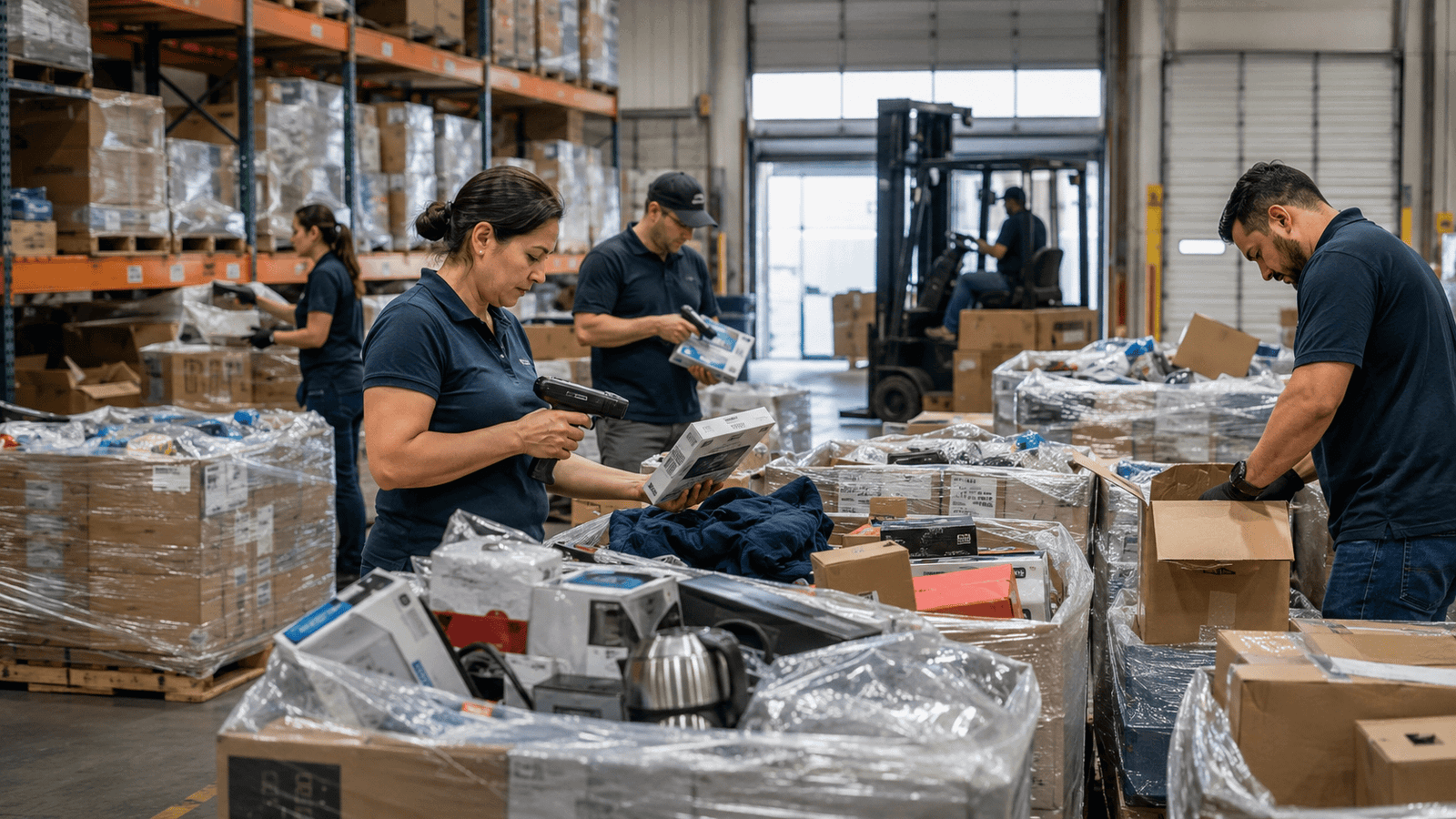
The merchandise is then sorted, graded, packaged, or sold in bulk. Some liquidation businesses sell individual products to consumers. Others sell cases, lots, or pallets to resellers.
Here are some of the most common sources of liquidation inventory.
Retail Returns
Customer returns are a major source of liquidation merchandise.
A product can be returned for many reasons. The customer may have changed their mind, ordered the wrong size, received the wrong item, or decided that the product was not suitable.
Some returned products are still in excellent condition. Others may have been opened or used.
For this reason, return merchandise can have different condition grades.
Always ask how a seller defines its condition categories before purchasing.
Overstock and Excess Inventory
Overstock occurs when a business has more products than it needs.
This can happen because of inaccurate sales forecasts, seasonal demand, canceled orders, or changes in customer preferences.
For example, a retailer may have thousands of phone cases for a smartphone model that is no longer popular.
The retailer may choose to sell the remaining inventory to a liquidation buyer instead of keeping it in storage.
Closeout Merchandise
Closeout merchandise is inventory that a retailer wants to clear from its shelves.
A store may be changing its product selection or making room for newer models.
Closeout products can sometimes be new and unused, but shoppers should still check the seller’s description and return policy.
Shelf-Pulls and Discontinued Products
Shelf-pulls are products removed from store shelves.
They may be new, but packaging can sometimes show signs of handling. Products can also be discontinued because a retailer or manufacturer no longer wants to carry them.
Discontinued products can be attractive to shoppers looking for items that are difficult to find in normal retail stores.
Store Closures and Business Liquidations
When a business closes, it may need to sell its remaining inventory.
This can include furniture, equipment, clothing, electronics, tools, office supplies, and other merchandise.
Business liquidation can happen through direct sales, liquidation companies, or auctions.
What Do Liquidation Stores Sell?
There is no single product category that defines a liquidation store.
Inventory depends on where the merchandise came from and what the seller currently has available.
Common categories include:
Clothing and Shoes
Liquidation stores may sell shirts, pants, jackets, dresses, shoes, bags, accessories, and other apparel.
Some items may be new with tags. Others may be customer returns or shelf-pulls.
Check sizes, condition, stains, damaged packaging, and missing accessories before buying.
Electronics
Electronics can include headphones, speakers, computer accessories, cables, small devices, monitors, and other consumer electronics.
This category requires extra care because an item may look new but still have a defect.
If testing is available, test the product before purchasing.
Home and Kitchen Products
You may find cookware, storage products, kitchen gadgets, small appliances, home décor, cleaning products, furniture accessories, and household items.
Some products are inexpensive because they have packaging damage rather than product damage.
Tools and Hardware
Liquidation inventory can include hand tools, power-tool accessories, hardware, garden equipment, and workshop products.
Check for missing components and make sure the product is suitable for its intended use.
Toys and Games
Toys, board games, puzzles, children’s products, and hobby items can appear in liquidation inventory.
For packaged products, check whether important pieces are missing and whether the packaging is sealed.
Beauty and Personal-Care Products
Beauty products can include personal-care devices, accessories, unopened cosmetics, grooming products, and other related merchandise.
Check packaging, seals, expiration information where applicable, and the seller’s condition description.
Mixed Merchandise
Some liquidation stores sell mixed lots containing several categories.
A single pallet might contain kitchen products, clothing, electronics, toys, and home goods.
Mixed merchandise can provide variety, but it can also make it harder to estimate the value of the entire purchase.
Why Are Products So Cheap at Liquidation Stores?
The biggest reason liquidation products are inexpensive is that the original seller wants to recover some value from inventory that is no longer suitable for normal retail sales.
Several factors can reduce the price.
Retail Returns
Returned merchandise may not be placed back on regular shelves.
Instead, the retailer may sell it through another channel.
Overstock
Excess inventory takes up storage space and ties up business money.
Selling it at a lower price can be more practical than storing it for a long time.
Damaged or Incomplete Packaging
A product may be perfectly usable even if its original box is damaged.
However, damaged packaging can make the item harder to sell at full retail price.
Discontinued Products
When a product is discontinued, businesses may want to clear remaining inventory.
The product can still be useful, but demand may be lower.
Seasonal Inventory
Products designed for a particular season can lose value when the season ends.
For example, holiday decorations may have limited demand after the holiday.
Liquidation can help businesses move this inventory.
Store Closing Sales
A business that is closing may need to sell inventory quickly.
Speed can become more important than achieving the original retail price.
Are Liquidation Stores Legit?
Yes, legitimate liquidation stores exist, but not every seller is equally reliable.
The term “liquidation” does not automatically guarantee that a seller is trustworthy.
Before spending money, research the business and understand exactly what you are buying.
How to Identify Legitimate Liquidation Sellers
Start by checking basic business information.
Look for:
- A clear business name
- A physical location or verifiable business information
- Clear contact details
- Detailed product descriptions
- Transparent condition information
- Clear pricing
- Clear shipping or pickup information
- A stated return or final-sale policy
- Independent customer reviews
A professional seller should be willing to explain the general source and condition of its inventory.
Check Reviews Carefully
Reviews can help you understand how a seller handles orders, product descriptions, shipping, and customer service.
Do not rely on one review.
Look for patterns across multiple independent sources.
Also pay attention to reviews that discuss the exact type of merchandise you want to buy.
Understand Product Conditions
A seller might use terms such as:
- New
- Like new
- Open box
- Customer return
- Used
- Salvage
- Damaged
- Untested
These terms can have different meanings between sellers.
Ask what the seller’s condition labels mean before purchasing.
Warning Signs of an Unreliable Seller
Be cautious when a seller:
- Provides almost no business information
- Refuses to explain product condition
- Uses unclear product descriptions
- Makes unrealistic promises about profits
- Pressures you to make a quick payment
- Has inconsistent pricing information
- Hides important fees
- Refuses to explain return or final-sale terms
A low price is not enough reason to ignore warning signs.
Types of Liquidation Stores
Liquidation businesses come in several forms.
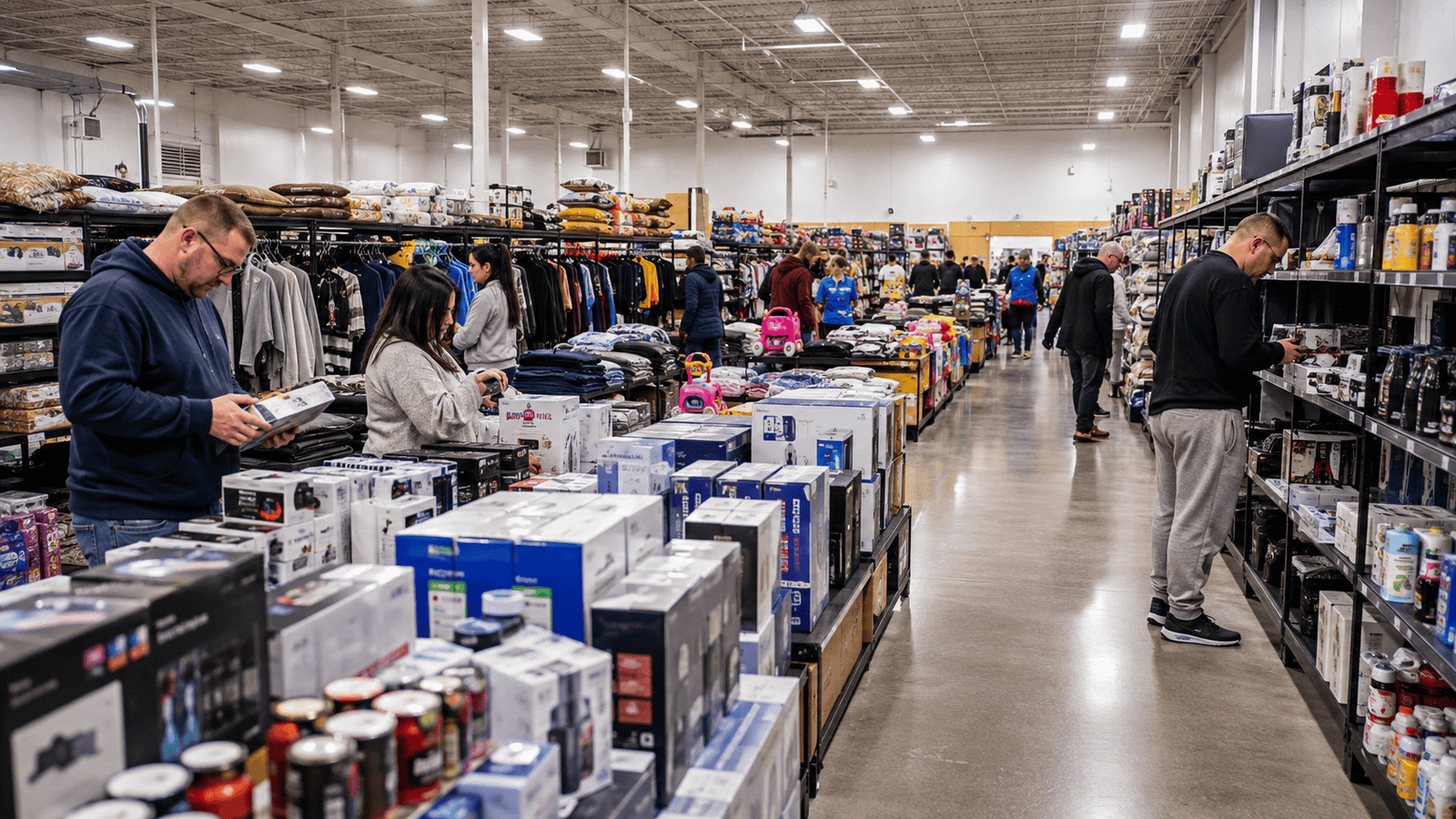
Physical Liquidation Stores
These are traditional stores where customers can walk in and inspect merchandise.
The main benefit is that you can often see the products before paying.
Online Liquidation Stores
Online liquidation sellers list merchandise on websites or online marketplaces.
Some sell individual items, while others sell cases, lots, or pallets.
Online shopping provides access to a wider range of sellers, but you may not be able to inspect the merchandise personally.
Liquidation Warehouses
Warehouses often handle large amounts of inventory.
Some sell directly to consumers. Others focus mainly on wholesalers and resellers.
Warehouse buying may involve larger quantities than a normal discount store.
Bin Stores
Bin stores place products in large bins and often use set pricing.
For example, the store may have one price on one day and a lower price later in the week.
Inventory changes frequently, so shoppers often visit regularly.
Pallet Liquidation Sellers
These businesses sell merchandise in pallet-sized lots.
A pallet can contain many products, sometimes from several categories.
Pallet purchases are more suitable for buyers who understand inventory risk and have enough space to store merchandise.
Auction-Based Liquidation Marketplaces
Some liquidation inventory is sold through auctions.
Buyers may bid against other customers.
Before bidding, calculate the maximum amount you are willing to pay, including buyer fees, shipping, taxes, and other costs.
What Is a Liquidation Pallet?
If you are researching what are liquidation stores, it is also important to understand liquidation pallets. A liquidation pallet is a pallet containing merchandise sold together as a lot.
Instead of buying one item, you purchase a group of products.
For example, a pallet might contain:
- Small appliances
- Clothing
- Home products
- Electronics
- Toys
- Tools
- Accessories
The exact contents depend on the seller and inventory source.
Manifested vs. Unmanifested Pallets
A manifested pallet comes with a list describing some or all of its contents.
A manifest may include product names, quantities, model numbers, or estimated retail values.
A manifested pallet can make it easier to estimate potential value, although the information should still be checked against the seller’s terms.
An unmanifested pallet may have little or no detailed product list.
This creates more uncertainty.
An unmanifested pallet may offer opportunities, but buyers should treat it as a higher-risk purchase because the exact contents may be unknown.
Potential Benefits of Liquidation Pallets
Understanding what are liquidation stores can help you understand why liquidation pallets are popular with shoppers and resellers.
Buying pallets can provide access to a large amount of inventory at once.
For resellers, this can create opportunities to source multiple products from one purchase.
However, pallets also require storage space, sorting time, testing, cleaning, and sometimes repairs.
The purchase price is only one part of the total cost.
Benefits of Shopping at Liquidation Stores
Knowing what are liquidation stores can help shoppers understand the potential advantages of buying from these businesses.
Liquidation stores can offer several advantages.
Lower Prices
The most obvious benefit is price.
You may find products at discounts compared with standard retail pricing.
However, compare the actual selling price rather than assuming every liquidation item is a bargain.
Finding Brand-Name Products
Liquidation channels can contain recognizable brands.
The availability of specific brands depends on the seller and inventory source.
Reselling Opportunities
Some people buy liquidation merchandise and resell individual products online or locally.
The goal is to purchase inventory for less than its expected resale value after accounting for all costs.
For anyone learning what are liquidation stores, reselling is one of the most common reasons people explore liquidation merchandise.
Variety of Merchandise
Liquidation stores often have changing inventory.
This can make shopping more interesting because you do not always know what you will find.
Finding Discontinued Items
Liquidation channels can sometimes contain products that are no longer widely available through traditional retailers.
This can be useful if you are looking for a particular discontinued item.
Risks of Buying From Liquidation Stores
Understanding what are liquidation stores also means understanding the risks involved.
Liquidation shopping has benefits, but it is not risk-free.
Products May Be Used or Returned
Some inventory comes from customer returns.
A returned product may be nearly new, but it could also show signs of use.
Never assume that a returned product is unused.
Missing Parts or Accessories
A product may be missing cables, manuals, batteries, attachments, or other components.
Check carefully before buying.
Damaged Packaging
Boxes may have dents, tears, labels, or other damage.
Packaging damage does not always mean product damage, but it is worth checking.
Limited Warranties
Liquidation merchandise may not have the same warranty coverage as products bought directly from an authorized retailer.
Ask about warranty coverage before purchasing expensive items.
Inconsistent Inventory
A liquidation store may have hundreds of one product today and none tomorrow.
If you need a product regularly, liquidation may not provide a reliable supply.
Final-Sale Policies
Some liquidation merchandise is sold as final sale.
That means you may not be able to return it simply because you changed your mind.
Always read the terms before paying.
Tips for Shopping at Liquidation Stores
If you understand what are liquidation stores and how they operate, a few simple habits can help you make better purchasing decisions.
Set a Budget
Decide how much you are comfortable spending before you shop.
This is especially important when buying pallets or large lots.
Inspect Products Carefully
If you are shopping in person, inspect the merchandise before paying.
Look for:
- Visible damage
- Missing parts
- Broken packaging
- Signs of use
- Incorrect sizes or models
- Missing accessories
Check Product Condition
Do not rely only on the product name.
Read the condition description.
If something is unclear, ask the seller.
Compare Prices Before Buying
Search for the same or similar product at other retailers.
This helps you understand whether the liquidation price is actually competitive.
For used or returned products, compare prices for products in similar condition.
Ask About Return Policies
Know whether the item is returnable before buying.
If the product is final sale, make sure the price reflects the additional risk.
Calculate the Total Cost
The purchase price is not always the final cost.
Consider:
Total Cost = Product Price + Shipping + Taxes + Fees + Repair or Cleaning Costs
For pallet buyers, also consider storage, transportation, testing, and labor.
Liquidation Stores vs. Regular Retail Stores
When comparing what are liquidation stores with traditional retailers, the main differences involve pricing, inventory, product condition, and return policies.
| Feature | Liquidation Stores | Regular Retail Stores |
|---|---|---|
| Pricing | Often lower | Usually standard retail pricing |
| Inventory | Frequently changing | More predictable |
| Condition | Can vary | Usually clearly standardized |
| Product selection | Depends on liquidation supply | Planned inventory |
| Returns | May be limited | Often more structured |
| Shopping experience | More unpredictable | More consistent |
| Product availability | Can be limited | Often easier to restock |
A regular retailer may be better when you need a specific product with predictable availability and standard warranty coverage.
A liquidation store may be better when you are comfortable with changing inventory and want to search for discounted products.
Ultimately, learning what are liquidation stores and understanding how their inventory, pricing, conditions, and policies work can help you decide whether liquidation shopping is right for you.
Liquidation Stores for Resellers
Liquidation stores can be a source of inventory for resellers.
A reseller purchases products with the intention of selling them to customers for more than the total cost.
However, buying cheap inventory does not automatically create profit.
Why Do Resellers Use Liquidation Stores?
Liquidation channels can provide access to large quantities of products.
A reseller might purchase a lot, inspect it, separate the products, and list individual items for sale.
This can be useful for online marketplaces, local sales, specialty stores, or other sales channels.
Buying Inventory for Online Marketplaces
Before buying liquidation merchandise for online sales, research whether the products are allowed on your chosen marketplace.
Some categories and brands may have selling restrictions.
Also consider shipping size, product demand, competition, and marketplace fees.
Calculate Potential Profit
A simple profit calculation is:
Estimated Profit = Selling Price − Total Cost
Your total cost should include more than the purchase price.
For example:
- Merchandise cost: $300
- Shipping: $75
- Supplies: $20
- Marketplace and payment fees: $65
- Cleaning or testing: $15
Total cost = $475
If the products eventually generate $700 in sales, the estimated profit before other business expenses would be $225.
Actual results can differ because some products may not sell, some may require refunds, and selling prices can change.
Choose Products With Resale Potential
Before buying, research:
- Current selling prices
- Product demand
- Competition
- Condition
- Shipping costs
- Return rates
- Brand restrictions
- Seasonal demand
A product with a high original retail price is not necessarily a good resale product.
Common Mistakes New Resellers Make
New resellers sometimes focus too much on the advertised retail value.
For example, a pallet might be advertised with a very high total retail value. That does not mean the products will sell for that amount today.
Other common mistakes include:
- Buying too much inventory
- Ignoring shipping costs
- Not testing returned electronics
- Forgetting marketplace fees
- Failing to research demand
- Assuming every item will sell
- Ignoring storage costs
- Buying products without understanding their condition
Start small and learn how the liquidation process works before committing a large amount of money.
How to Find Liquidation Stores Near You
Finding liquidation stores is often easier when you use several methods.
Search Engines and Maps
Search online for phrases such as:
- Liquidation stores near me
- Liquidation warehouse near me
- Bin stores near me
- Discount liquidation store
- Liquidation pallets near me
- Closeout stores near me
Map listings can help you identify businesses in your area.
Check their opening hours before visiting.
Local Liquidation Warehouses
Search for warehouses that specialize in closeouts, returns, overstock, and wholesale merchandise.
Some warehouses may have specific rules for consumers, so check before making a trip.
Bin Stores and Discount Outlets
Bin stores can be a convenient way to explore liquidation merchandise without buying an entire pallet.
Because inventory changes often, visiting at different times may produce different results.
Business Directories
Local business directories can help you find discount stores, liquidation outlets, and warehouse sellers.
Check independent reviews and business information before purchasing.
Online Liquidation Marketplaces
Online marketplaces can give you access to sellers outside your local area.
This can provide more choices, but shipping can significantly affect the final cost.
For large purchases, calculate shipping before deciding whether the deal makes sense.
FAQ
What are liquidation stores?
What are liquidation stores? They are businesses that sell merchandise obtained through liquidation channels. Their inventory may include customer returns, overstock, closeouts, shelf-pulls, discontinued products, and merchandise from store or business closures.
The products are often sold below normal retail prices, but condition and return policies can vary.
Are liquidation stores worth it?
If you understand what are liquidation stores and how their inventory works, they can be worth it for shoppers who are comfortable with changing inventory and who carefully compare prices.
The value depends on the product, condition, price, and return policy.
A liquidation item is not automatically a good deal simply because it has a low price.
Are liquidation products new or used?
They can be either.
Some liquidation products are new and unopened. Others may be open-box, returned, used, damaged, or incomplete.
Understanding what are liquidation stores also means knowing that product conditions can vary significantly. Always check the seller’s condition description before purchasing.
Can you make money buying liquidation merchandise?
Yes, resellers can potentially make money by purchasing liquidation inventory and selling individual products.
However, profit is not guaranteed.
People researching what are liquidation stores should also understand the costs involved in reselling. You need to account for purchase costs, shipping, marketplace fees, taxes, storage, repairs, returns, and products that may not sell.
Why are liquidation products so cheap?
Liquidation products are often inexpensive because businesses want to move inventory that they no longer need for regular retail sales.
For anyone asking what are liquidation stores, this is one of the key reasons their prices can be lower than traditional retail stores.
The inventory may be excess stock, returned merchandise, discontinued products, seasonal items, shelf-pulls, or products from a closing business.
Can you return liquidation items?
It depends on the seller.
Some liquidation stores accept certain returns, while others sell merchandise as final sale.
Before buying, make sure you understand what are liquidation stores and how the specific seller handles returns. Always check the return policy, especially when purchasing used, returned, untested, or palletized merchandise.
Are liquidation pallets a good idea for beginners?
They can be, but they carry more risk than buying a few individual products.
A beginner who understands what are liquidation stores may find it easier to start with a small lot or a few individual items. This allows you to learn how to inspect products, calculate costs, and understand resale demand before buying larger quantities.
What should I check before buying a liquidation pallet?
Check the seller’s reputation, product condition, manifest if available, shipping costs, return policy, fees, and estimated resale value.
If you are learning what are liquidation stores for the first time, do not base your decision only on the advertised retail value of the pallet.
Are all liquidation stores the same?
No.
Some specialize in customer returns. Others focus on overstock, closeouts, store closures, or wholesale pallets.
Their pricing, product conditions, warranties, and return policies can also differ. This is why understanding what are liquidation stores is important before choosing a particular seller.
Conclusion
So, what are liquidation stores?
Liquidation stores are businesses that sell merchandise obtained from sources such as customer returns, overstock, closeouts, shelf-pulls, discontinued inventory, store closures, and business liquidations. Because this inventory may no longer be suitable for normal retail sales, it is often offered at lower prices.
Understanding what are liquidation stores can help shoppers make better decisions when looking for discounted merchandise. Liquidation shopping can be a good way to discover discounted clothing, electronics, home goods, tools, toys, and other merchandise. It can also provide inventory opportunities for resellers.
However, low prices come with potential risks. Products may be returned, used, damaged, incomplete, or sold without a standard warranty. Inventory can also change quickly, and some purchases may be final sale.
The best approach is to research the seller, inspect products carefully, understand the condition, compare prices, check the return policy, and calculate the total cost before buying.
When you understand what are liquidation stores and how they work, you can make more informed decisions and focus on genuine value rather than simply choosing the lowest price.


[…] What is an A Crate Deal liquidation outlet? […]