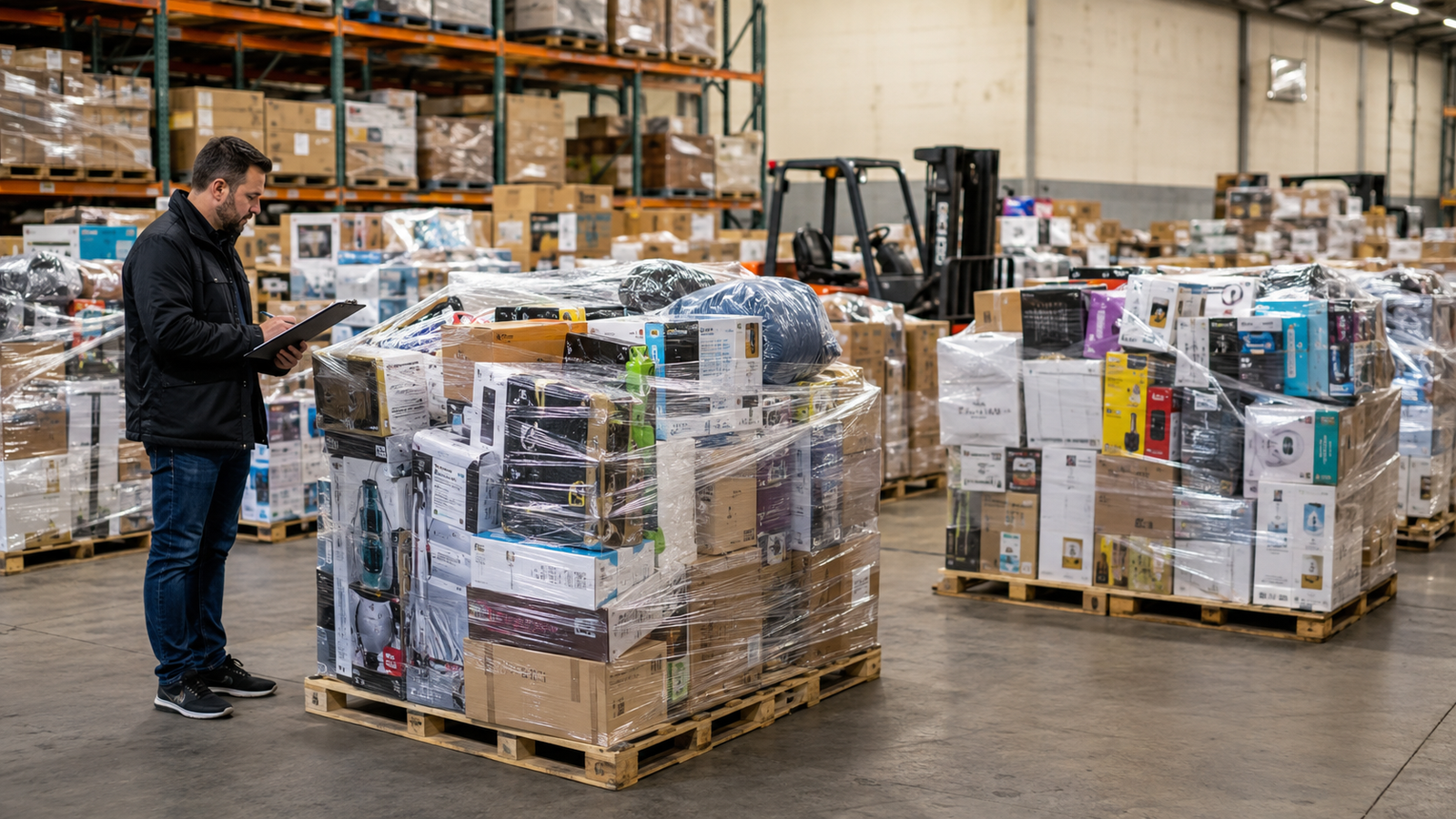
Buying merchandise pallets has become a popular way for retailers, online sellers, and small businesses to source products at lower prices. Instead of purchasing individual items from traditional wholesalers, many entrepreneurs buy entire pallets filled with customer returns, overstock products, excess inventory, or liquidation stock.
These pallets can include electronics, clothing, home goods, tools, toys, and many other product categories. For resellers, the appeal is simple: buy inventory in bulk, sort the products, and sell individual items for a potential profit.
However, success depends on knowing where to buy pallets of merchandise and understanding what you are actually purchasing. Not every pallet is the same. Some contain valuable products ready for resale, while others may include damaged, incomplete, or difficult-to-sell items.
In this guide, you will learn where to buy pallets of merchandise, the different types available, how much they cost, what to check before purchasing, and how to avoid common mistakes. Whether you are starting a small resale business or expanding your inventory, knowing where to buy pallets of merchandise can help you make smarter buying decisions and choose inventory that fits your budget and business goals.
What Are Merchandise Pallets?
Merchandise pallets are large shipping platforms loaded with products sold together as a single unit. These pallets usually contain inventory that businesses need to move quickly because it is no longer part of their regular sales process.
Large retailers, manufacturers, and distributors often have excess stock for many reasons. Products may be returned by customers, replaced by newer models, removed from store shelves, or left over after seasonal sales.
Instead of storing these products indefinitely, companies sell them through liquidation channels. Buyers can then purchase these pallets at discounted prices and resell the items through online marketplaces, local stores, flea markets, or social media platforms.
Common Types of Merchandise Pallets
Merchandise pallets can contain many different product categories, including:
- Electronics such as headphones, smart devices, computers, and accessories
- Clothing and footwear
- Home appliances and household items
- Furniture and home décor products
- Tools and hardware
- Toys and games
- Beauty products
- Seasonal items
- Mixed general merchandise
The type of pallet you choose should match your experience, customer base, and selling platform.
For example, someone selling on online marketplaces may prefer small electronics because they are easy to ship. A local reseller may prefer furniture or home goods because customers can pick them up directly.
Why Do Companies Sell Merchandise Pallets?
Businesses sell pallet inventory for several reasons.
Customer Returns
Many online and retail purchases are returned for reasons unrelated to product quality. Customers may return items because they changed their mind, ordered the wrong size, or no longer need the product.
Returned items often cannot be sold as brand-new inventory, so retailers move them through liquidation channels.
Overstock Inventory
Retailers frequently purchase more products than they can sell. Seasonal items, discontinued products, or slow-moving inventory can take valuable warehouse space.
Selling these products through liquidation helps companies recover some value while clearing storage areas.
Store Closures and Inventory Changes
When businesses close locations or change product lines, they often need to sell remaining inventory quickly.
Liquidation pallets provide a practical way to move large amounts of stock at once.
Difference Between Liquidation, Overstock, and Customer Return Pallets
Understanding pallet conditions is important before buying.
Liquidation Pallets
Liquidation pallets usually contain products that companies want to sell quickly. These pallets may include customer returns, excess inventory, damaged packaging, or discontinued products.
The condition can vary greatly.
Overstock Pallets
Overstock pallets contain products that were never sold. These items are often unused and may still have original packaging.
Because the products are usually in better condition, overstock pallets may cost more than customer-return pallets.
Customer Return Pallets
Customer-return pallets contain items that buyers have sent back.
Some products may be unused, while others may have missing parts, cosmetic damage, or functional issues. These pallets often require more inspection and sorting.
Where to Buy Pallets of Merchandise
If you are searching for where to buy pallets of merchandise, there are several reliable sources available. Each option has different benefits, costs, and risks.
The best choice depends on your budget, location, product category, and resale experience.
A. Online Liquidation Marketplaces
Online liquidation marketplaces are one of the most common places to purchase merchandise pallets.
These platforms connect retailers, manufacturers, and liquidation companies with buyers looking for discounted inventory.
Buyers can browse available pallets, review product details, check manifests, and place orders online.
How Online Liquidation Marketplaces Work
The process is usually simple:
- Create a buyer account
- Browse available pallets
- Review product descriptions
- Check estimated value and condition
- Purchase or bid on inventory
- Arrange shipping or pickup
Many platforms organize pallets by category, such as electronics, clothing, tools, or mixed merchandise.
Advantages of Online Liquidation Marketplaces
Online marketplaces offer several benefits:
Wide Product Selection
You can access inventory from many sellers without visiting multiple warehouses.
Convenient Buying Process
Everything can be researched and purchased online.
Access to Large Retail Sources
Some platforms receive inventory from major retailers and manufacturers.
Easier Market Comparison
Buyers can compare prices, categories, and pallet conditions before purchasing.
Disadvantages of Online Liquidation Marketplaces
However, there are also challenges.
Limited Physical Inspection
You usually cannot inspect every item before buying.
Shipping Costs
Large pallets can become expensive to transport, especially across long distances.
Product Condition Risk
Photos and descriptions may not reveal every issue.
What to Check Before Buying Online
Before purchasing, review:
- Seller ratings
- Product condition details
- Available photos
- Manifest information
- Shipping costs
- Buyer reviews
- Return policies
A cheap pallet may not be a good deal if transportation costs are high or many items cannot be resold.
B. Retailer Liquidation Auctions
Retailer liquidation auctions allow buyers to bid on inventory directly through auction-style platforms.
Large retailers often use auctions to sell returned goods, excess inventory, and discontinued products.
How Retailer Auctions Work
Sellers create listings with information about the pallet or truckload.
Buyers then compete by placing bids. The highest bidder purchases the inventory when the auction closes.
Some auctions provide detailed manifests, while others provide only basic descriptions.
Types of Merchandise Available
Retailer auctions may include:
- Electronics
- Appliances
- Clothing
- Furniture
- Home improvement products
- Seasonal merchandise
- Mixed retail inventory
Auction Fees and Bidding Considerations
Before bidding, remember that the final price may not be your total cost.
Additional expenses can include:
- Buyer fees
- Platform fees
- Shipping charges
- Loading fees
- Taxes
A pallet that sells for $500 may actually cost significantly more after all additional expenses are included.
Tips for Auction Buyers
Set a maximum budget before bidding.
Avoid emotional bidding because competition can push prices higher than the actual resale value.
Always calculate your expected profit before placing a bid.
C. Wholesale Liquidation Companies
Wholesale liquidation companies purchase large amounts of excess inventory and sell it to smaller businesses.
This option can be useful for resellers who want a more consistent supply of products.
Buying Directly From Liquidation Wholesalers
Wholesale suppliers often offer:
- Single pallets
- Multiple pallet purchases
- Truckloads
- Category-specific inventory
Some specialize in specific products, such as electronics or clothing.
Minimum Order Requirements
Some wholesalers allow individual pallet purchases, while others require larger orders.
Before working with a supplier, check:
- Minimum purchase amount
- Shipping options
- Product conditions
- Inventory availability
- Payment requirements
Comparing Suppliers
Not all liquidation wholesalers provide the same quality.
Compare:
- Customer reviews
- Transparency of product descriptions
- Years in business
- Communication quality
- Previous buyer experiences
A reliable supplier should clearly explain what buyers can expect.
D. Local Liquidation Warehouses
Buying from a local liquidation warehouse can be a smart option, especially for beginners.
Instead of ordering online and paying expensive shipping, you can visit the warehouse, inspect inventory, and arrange pickup.
Benefits of Buying Locally
Physical Inspection
You may be able to see pallet conditions before purchasing.
Lower Transportation Costs
Picking up inventory yourself can reduce shipping expenses.
Faster Access
You do not have to wait for long-distance delivery.
Local Business Relationships
Building relationships with warehouse owners can help you find future inventory opportunities.
Transportation and Pickup Considerations
Before buying locally, consider:
- Vehicle size
- Loading assistance
- Storage space
- Distance from your location
A full pallet requires proper transportation and enough room for storage.
E. Online B2B Marketplaces
Business-to-business marketplaces connect suppliers with buyers who want wholesale inventory.
These platforms may include liquidation sellers, manufacturers, distributors, and wholesalers.
How B2B Marketplaces Work
Sellers create listings describing available products.
Buyers can review:
- Product quantities
- Pricing
- Supplier information
- Minimum order requirements
- Shipping options
Verify Seller Information
Before purchasing, check:
- Company details
- Seller history
- Reviews
- Product photos
- Communication quality
Avoid sellers who provide vague descriptions or unrealistic promises.
A trustworthy supplier should provide clear information about the products being sold.
F. Local Business Liquidation Sales
Another option is buying inventory directly from businesses that are closing or changing operations.
Retail stores, small shops, and warehouses sometimes sell remaining inventory directly to buyers.
How to Find Local Opportunities
You can search through:
- Local business announcements
- Community groups
- Auction listings
- Classified websites
- Commercial liquidation companies
Benefits of Direct Purchases
Buying directly may allow you to negotiate prices and inspect products before purchasing.
However, always verify that the seller is legitimate and that the inventory ownership is clear
Types of Merchandise Pallets You Can Buy
When deciding where to buy pallets of merchandise, choosing the right pallet type is just as important as choosing the supplier. Different product categories have different levels of demand, competition, storage needs, and resale potential.
Beginners should usually focus on products they understand and can evaluate easily.
General Merchandise Pallets
General merchandise pallets contain a mixture of products from different categories.
A pallet may include items such as:
- Kitchen products
- Small appliances
- Electronics accessories
- Household items
- Personal care products
- Toys
- Clothing
These pallets can offer variety, but they also require more sorting and research.
General merchandise pallets work well for sellers who already have multiple sales channels and can handle different product types.
Electronics Pallets
Electronics pallets are popular among resellers because many electronic products have strong demand.
They may include:
- Headphones
- Smart devices
- Gaming accessories
- Computer accessories
- Mobile accessories
- Small appliances
However, electronics require careful inspection.
Before selling electronics, check:
- Does the item power on?
- Are all accessories included?
- Is the product locked or damaged?
- Does it need repair?
A pallet with high-value electronics can be profitable, but repair costs and defective items can reduce margins.
Clothing and Apparel Pallets
Clothing pallets are common because retailers frequently deal with:
- Seasonal inventory
- Customer returns
- Size changes
- Unsold collections
They may include:
- Shirts
- Jackets
- Shoes
- Sportswear
- Fashion accessories
Clothing is often easier to store and ship compared with larger products.
However, resellers should inspect:
- Fabric condition
- Stains
- Missing tags
- Current fashion trends
- Sizes available
A pallet full of outdated styles may be harder to sell.
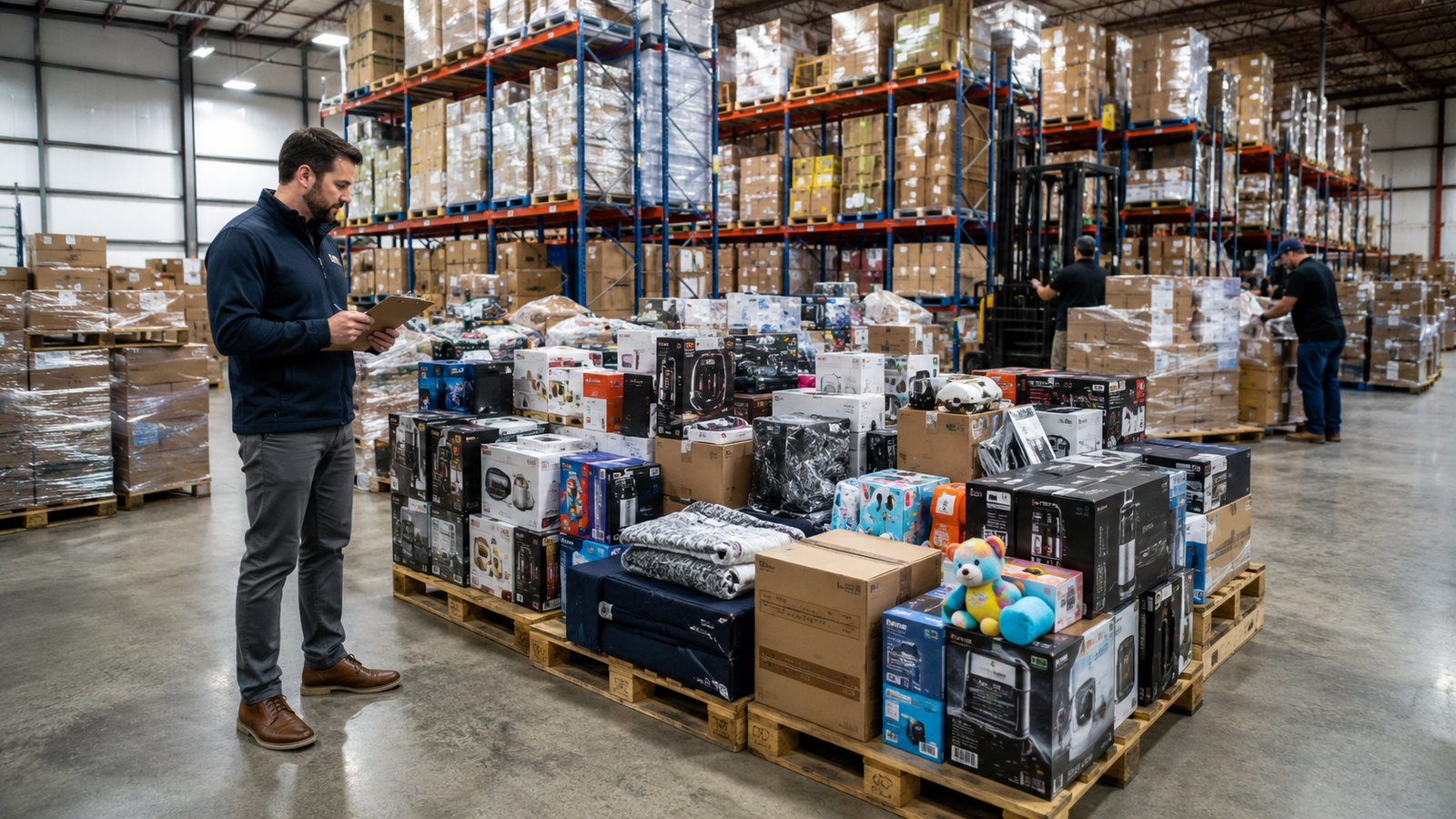
Home Goods Pallets
Home goods pallets include products used in everyday living spaces.
Examples include:
- Kitchen tools
- Storage products
- Home décor
- Bedding
- Lighting products
- Small furniture
These items often perform well through local sales because buyers may prefer pickup instead of shipping.
Tools and Hardware Pallets
Tools and hardware pallets can attract buyers because they appeal to homeowners, contractors, and DIY customers.
Possible items include:
- Power tools
- Hand tools
- Garden equipment
- Hardware accessories
- Workshop supplies
Check tool condition carefully because used or returned tools may require testing.
Toys and Seasonal Merchandise Pallets
Toys and seasonal items can be profitable during the right time of year.
Examples:
- Children’s toys
- Holiday decorations
- Outdoor games
- Party supplies
Timing is important. A pallet of holiday products may sell quickly before the season but become difficult to move afterward.
Mixed Merchandise Pallets
Mixed pallets contain products from several categories.
They can provide opportunities to discover valuable items, but they also create more work.
You may need to:
- Sort products
- Research prices
- Test different items
- Create multiple listings
Mixed pallets are often better for experienced sellers who already understand inventory management.
How Much Do Merchandise Pallets Cost?
The cost of merchandise pallets varies widely depending on several factors.
There is no fixed price because every pallet has different products, quantities, conditions, and resale potential.
A pallet may cost anywhere from a few hundred dollars to several thousand dollars depending on the inventory type.
Factors Affecting Pallet Prices
Several factors influence pricing:
Product Category
Electronics and branded products usually cost more than general household goods.
Brand Value
Pallets containing popular brands may have higher prices because buyers expect stronger resale demand.
Condition
New, unused inventory usually costs more than customer-return products.
Quantity
Larger pallets or truckloads generally have higher total prices but may offer better pricing per item.
Market Demand
Products with strong consumer demand often attract more buyers and higher auction prices.
Manifested vs. Unmanifested Pallets
One important factor affecting price is whether the pallet includes a manifest.
What Is a Manifested Pallet?
A manifested pallet includes a detailed list of products inside the pallet.
A manifest may show:
- Product names
- Quantity
- Brand information
- Estimated retail prices
- Product condition
For example:
| Product | Quantity | Condition |
|---|---|---|
| Wireless headphones | 10 | Customer return |
| Smart watches | 5 | New |
| Phone cases | 30 | New |
This information helps buyers estimate possible resale value.
What Is an Unmanifested Pallet?
An unmanifested pallet, sometimes called a mystery pallet, does not include a detailed inventory list.
The buyer usually knows only:
- Product category
- General condition
- Approximate pallet size
These pallets are often cheaper but carry more uncertainty.
Shipping and Handling Costs
Many beginners focus only on the pallet price and forget transportation costs.
Shipping expenses depend on:
- Distance
- Pallet weight
- Delivery method
- Location
- Freight rates
A low-cost pallet can become expensive if shipping is high.
Always calculate your total investment before buying.
Marketplace and Auction Fees
Some platforms charge additional fees, such as:
- Buyer premiums
- Service charges
- Payment processing fees
- Storage fees
Read all costs before completing a purchase.
How to Choose the Right Merchandise Pallet
Choosing the right pallet requires research and realistic planning.
Define Your Resale Niche
Start by deciding what type of products you want to sell.
Ask yourself:
- Who are my customers?
- Where will I sell?
- Do I understand this product category?
- Can I test and store these items?
A beginner who understands smartphones may perform better with electronics than with random mixed pallets.
Check the Manifest When Available
A manifest helps you estimate:
- Number of products
- Product quality
- Potential selling prices
- Possible profit
Do not rely only on the estimated retail value.
Retail price does not equal actual resale price.
Estimate Realistic Resale Value
Research what similar items actually sell for.
Check:
- Online marketplaces
- Local selling groups
- Completed sales data
A product with a $100 retail price may only sell for $40 in the used market.
Consider Product Condition
Understand the difference between:
- New
- Open box
- Used
- Damaged
- Salvage
Your ability to repair, clean, or refurbish products can affect profitability.
Check Shipping Costs
Before purchasing, calculate:
- Product cost
- Shipping
- Storage
- Packaging
- Selling fees
Your real cost is more than the pallet price.
Research the Seller
Look for:
- Customer feedback
- Business history
- Clear policies
- Honest product descriptions
A reputable seller reduces unnecessary risk.
Start With a Smaller Purchase
New buyers should avoid immediately purchasing large truckloads.
A single pallet allows you to learn:
- Product sorting
- Testing
- Pricing
- Customer demand
You can increase your purchases after understanding the process.
Manifested vs. Unmanifested Pallets: Which Is Better?
Both pallet types have advantages and disadvantages.
Manifested Pallet Advantages
- Lower uncertainty
- Easier profit calculation
- Better inventory planning
- Easier product research
Manifested Pallet Disadvantages
- Usually higher prices
- Popular pallets may attract more buyers
- Some information may still be incomplete
Unmanifested Pallet Advantages
- Lower purchase cost
- Opportunity to discover valuable products
- Less competition in some cases
Unmanifested Pallet Disadvantages
- Higher risk
- Unknown product condition
- Difficult profit prediction
For beginners, manifested pallets are often the safer choice because they provide more information before spending money.
What to Check Before Buying Merchandise Pallets
Before purchasing any pallet, complete a careful review.
Seller Reputation
Research the seller before making payment.
Check:
- Reviews
- Business information
- Customer experiences
- Online presence
Avoid sellers who cannot provide basic company details.
Product Descriptions
Read descriptions carefully.
Look for:
- Product category
- Condition details
- Quantity information
- Known defects
Photos
Photos can reveal useful information.
Check whether images show:
- Actual pallets
- Product examples
- Packaging condition
Be cautious if sellers only use generic stock images.
Manifest Accuracy
If a manifest is provided, review it carefully.
Check whether:
- Product quantities are clear
- Brands are listed
- Conditions are explained
Return Policies
Many liquidation purchases are final sale.
Understand the policy before buying.
Shipping Terms
Know:
- Who arranges shipping
- Delivery timeline
- Additional charges
- Pickup requirements
Payment Methods
Use secure payment methods whenever possible.
Avoid payment arrangements that provide no buyer protection.
Customer Reviews
Previous buyers can provide insight into:
- Product quality
- Seller communication
- Accuracy of listings
Minimum Order Requirements
Some suppliers require:
- Multiple pallets
- Business accounts
- Large purchases
Confirm requirements before ordering.
Common Mistakes to Avoid When Buying Merchandise Pallets
Many new resellers lose money because they underestimate the challenges. Knowing where to buy pallets of merchandise is important, but understanding the risks is equally important.
Buying Only Based on Advertised Retail Value
A pallet advertised as containing $10,000 worth of retail products does not mean you will earn $10,000.
Retail value and resale value are different. When researching where to buy pallets of merchandise, focus on realistic resale prices rather than advertised retail values.
Ignoring Shipping Expenses
A profitable-looking pallet may become unprofitable after adding freight costs.
Always calculate your complete investment before deciding where to buy pallets of merchandise.
Purchasing Without Researching the Seller
A low price does not always mean a good deal.
Verify the supplier before purchasing. Check seller reviews, return policies, product descriptions, and other details before choosing where to buy pallets of merchandise.
Assuming Every Item Can Be Sold
Some products may be:
- Broken
- Missing parts
- Outdated
- Difficult to sell
Always expect some loss.
Buying Too Many Pallets Too Soon
Large purchases create problems if you do not have:
- Storage space
- Customers
- Selling experience
Start small and scale gradually. This approach also gives you time to learn where to buy pallets of merchandise that fit your business.
Failing to Calculate Profit
Before buying, estimate:
- Total cost
- Expected sales
- Selling fees
- Possible losses
How to Calculate Potential Profit From Merchandise Pallets
Profit calculation is one of the most important parts of pallet buying.
A simple formula is:
Potential Profit = Total Sales Revenue – Total Expenses
Include All Costs
Your expenses may include:
- Pallet purchase price
- Shipping
- Cleaning supplies
- Repairs
- Packaging
- Marketplace fees
- Storage costs
Example Profit Calculation
Imagine you buy a customer-return electronics pallet.
Purchase price:
$500
Shipping:
$150
Testing and repair:
$100
Total investment:
$750
After sorting, you sell products for:
- Headphones: $200
- Accessories: $150
- Smart devices: $500
- Other items: $150
Total sales:
$1,000
Estimated profit:
$1,000 – $750 = $250
This example shows why accurate calculations matter.
A pallet is only profitable when the final sales value exceeds all costs. Before buying, research where to buy pallets of merchandise and compare the total investment with realistic resale potential.
Tips for Reselling Merchandise From Pallets
Buying inventory is only the first step. Successful resellers also need an effective selling process.
Sort Inventory Into Categories
Separate products into groups:
- Ready to sell
- Needs cleaning
- Needs repair
- Parts only
- Unsellable
This saves time and improves organization.
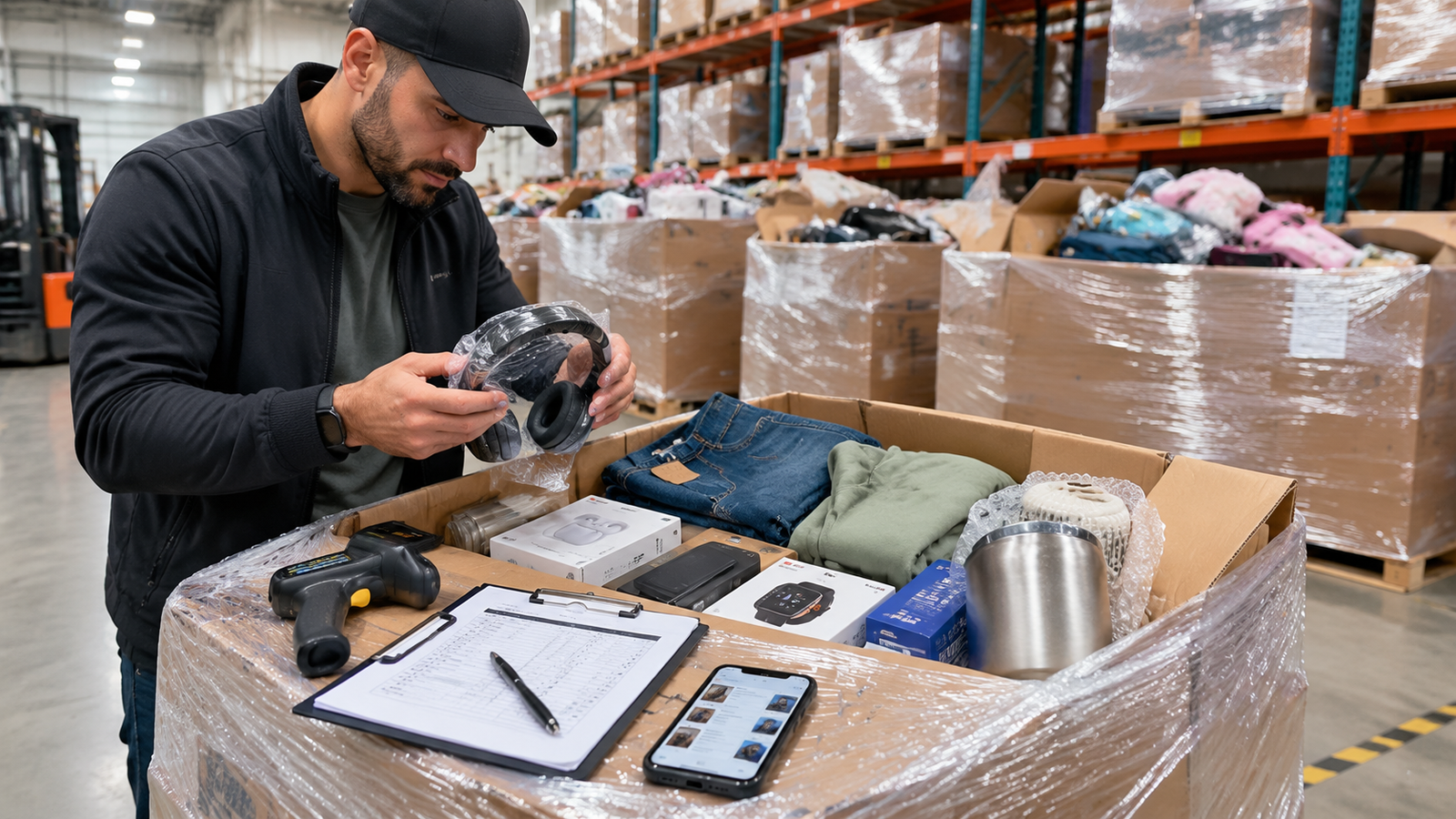
Test Products When Necessary
For electronics and tools, test functionality before listing.
Honest product descriptions help build customer trust.
Clean and Photograph Items
Good presentation improves sales.
Use:
- Clear photos
- Natural lighting
- Detailed descriptions
Research Individual Product Prices
Do not guess prices.
Compare similar listings and adjust based on condition.
Choose Suitable Selling Platforms
Possible options include:
- Online marketplaces
- Social media shops
- Local classified websites
- Flea markets
- Your own website
Choose platforms that match your products.
Keep Accurate Inventory Records
Track:
- Purchase cost
- Product condition
- Selling price
- Profit
Good records help you understand which pallets perform best.
Are Merchandise Pallets Worth Buying?
Merchandise pallets can be a good opportunity for people who understand the risks and approach the process carefully. Knowing where to buy pallets of merchandise from reliable suppliers can also help buyers make better purchasing decisions.
Potential Benefits
Advantages include:
- Lower inventory costs
- Access to discounted products
- Opportunity for business growth
- Variety of products available
Potential Risks
Challenges include:
- Unknown product conditions
- Storage requirements
- Unsold inventory
- Repair costs
- Shipping expenses
Buying pallets does not guarantee profit. Before deciding where to buy pallets of merchandise, compare the product condition, seller reputation, shipping costs, and potential resale value.
Success depends on product selection, supplier quality, accurate calculations, and effective selling. Researching where to buy pallets of merchandise can help beginners choose inventory that better fits their budget and resale strategy.
For many beginners, starting with one carefully researched pallet is a better strategy than making a large investment immediately.
Frequently Asked Questions
Where can I buy pallets of merchandise?
If you are wondering where to buy pallets of merchandise, you can explore online liquidation marketplaces, retailer auctions, wholesale liquidation companies, local liquidation warehouses, B2B marketplaces, and local business liquidation sales.
The best option depends on your location, budget, and product category.
What is the cheapest way to buy liquidation pallets?
The cheapest method is often buying locally because you can reduce shipping costs. When comparing where to buy pallets of merchandise, always consider the total cost, including shipping, taxes, and other fees.
However, the lowest purchase price is not always the best deal. Always consider product quality and resale potential.
Are merchandise pallets profitable?
Yes, merchandise pallets can be profitable, but results vary.
Profit depends on:
- Buying price
- Product condition
- Market demand
- Selling ability
- Operating costs
Choosing the right place where to buy pallets of merchandise can also affect your potential profit.
Can beginners buy liquidation pallets?
Yes. Beginners can buy pallets, but they should start with smaller purchases and learn how liquidation inventory works. Before making a purchase, beginners should research where to buy pallets of merchandise from reliable and trusted sellers.
What type of pallet is best for resale?
The best pallet depends on your skills and customers.
Popular options include electronics, tools, clothing, and home goods. You should also compare different suppliers and marketplaces to understand where to buy pallets of merchandise that match your target customers.
Should I buy manifested or unmanifested pallets?
Beginners usually benefit from manifested pallets because they provide more information and reduce uncertainty.
Experienced buyers may choose unmanifested pallets for lower prices and higher upside potential. Regardless of where to buy pallets of merchandise, always check whether the pallet includes a detailed manifest before purchasing.
How much should I spend on my first pallet?
Many beginners start with a smaller investment to learn the process.
The right amount depends on your budget, storage space, and ability to resell products. Start small, research suppliers carefully, and compare your options before investing in larger merchandise pallets.
Conclusion: Where to Buy Pallets of Merchandise
If you are wondering where to buy pallets of merchandise, the best sources include online liquidation marketplaces, retailer auctions, liquidation wholesalers, local warehouses, and direct business liquidation sales.
The most important step is not simply finding cheap pallets. It is choosing reliable sellers, understanding product conditions, calculating total costs, and knowing where to buy pallets of merchandise that match your resale strategy.
For beginners, starting with a small, well-researched pallet is usually the smartest approach. Learn how to evaluate products, track profits, and understand customer demand before expanding. Researching where to buy pallets of merchandise from trusted sources can help reduce unnecessary risks.
With careful planning and realistic expectations, knowing where to buy pallets of merchandise can help you find useful inventory for a growing resale business.


[…] Where can I buy pallets near me? […]